When You Need an Acoustic Study and When You Don't
Reading time: 7 minutes
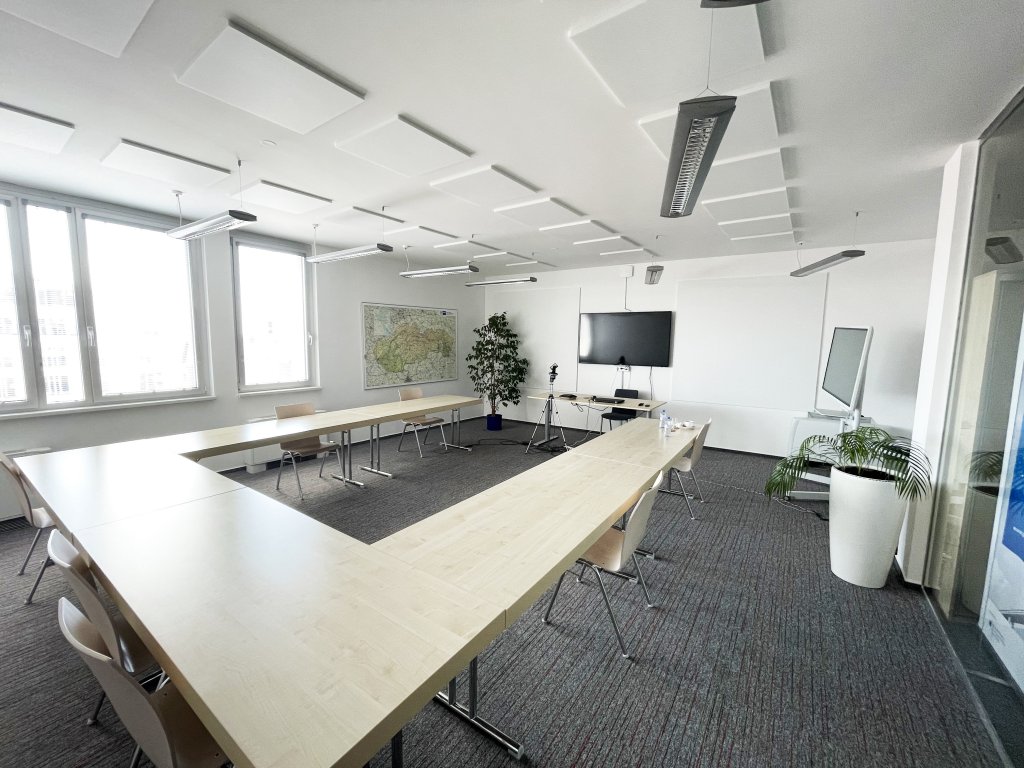
Acoustic studies appear inconsistently in proposals. In one proposal, the study is listed as a separate item with its own price, while in another it is missing entirely. The client is then left wondering which proposal is incomplete.
You need an acoustic study for spaces where room acoustics must be addressed comprehensively, such as theatres, cinemas and stadiums. For a meeting room, conference room or ordinary commercial space, you generally do not need one, and reverberation time is not normally measured there either. It is a separately paid service outside standard system design, so its absence from a meeting room proposal is not a mistake.
Quick overview
- What an acoustic study contains
- What reverberation time and intelligibility values can realistically be achieved
- Which spaces benefit from an acoustic study
- What triggers the need to address room acoustics
- Why reverberation time is not measured in meeting rooms
- What is done in smaller spaces instead of a full study
- Who prepares the study and why it matters
- How to include it in the project brief
- Frequently asked questions
What an acoustic study contains
An acoustic study examines how sound behaves in the space itself, before any equipment is installed. It describes how sound reflects, how long it remains in the room and whether speech will be intelligible throughout the audience area.
The study has two main parts. The first is room-acoustics simulation, which MediaTech carries out using EASE. The second is acoustic measurement in the actual space, where reverberation time and speech intelligibility are measured.
This is a different discipline from sound system design. Sound system design determines which equipment belongs in the space and how it will cover the listening area. An acoustic study deals with the room itself. This is why the two services are ordered and charged separately. Our complete guide to sound systems for commercial spaces explains how the two fit together within the overall project.
What reverberation time and intelligibility values can realistically be achieved
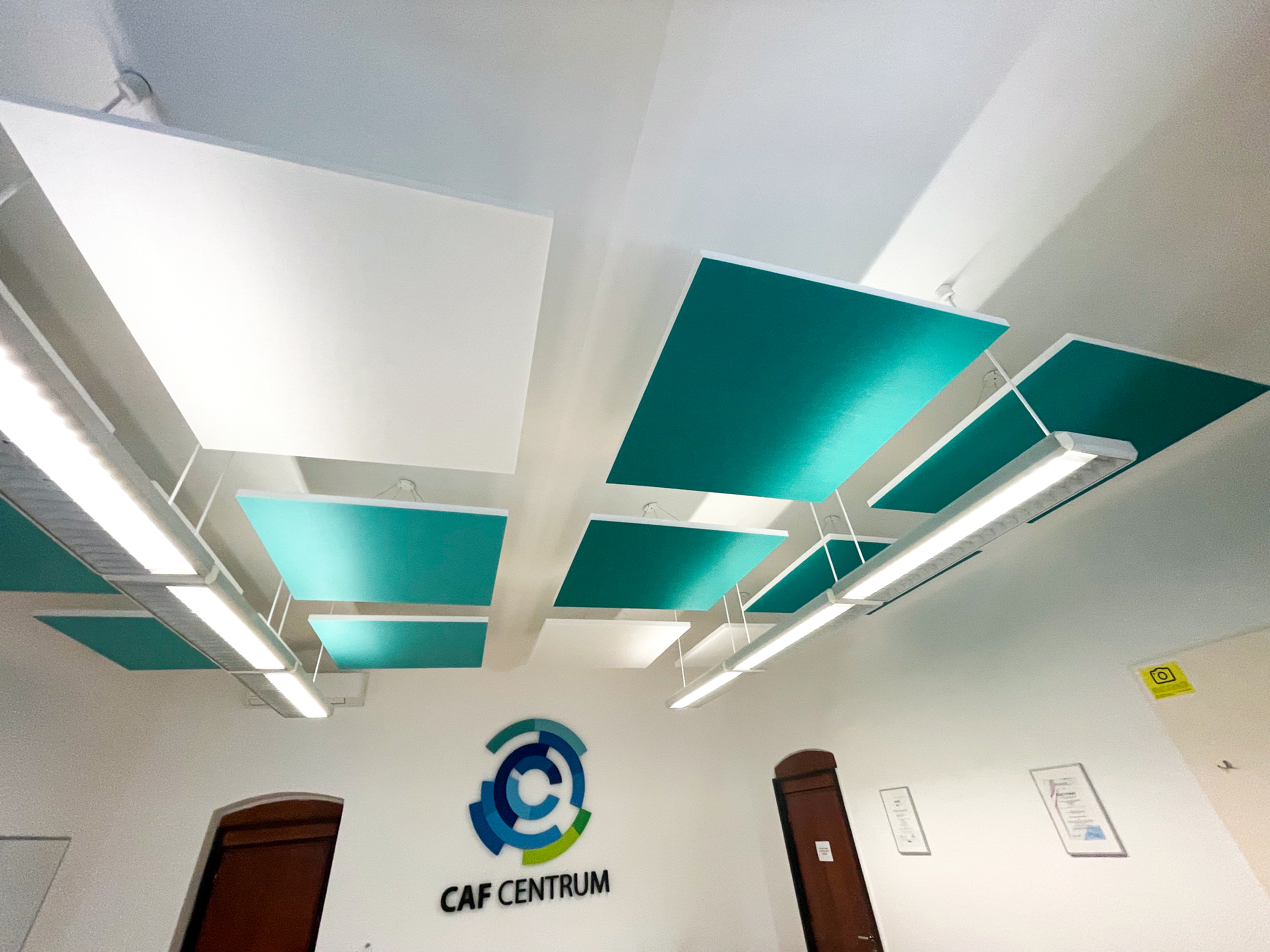
Reverberation time and speech intelligibility have target values, and MediaTech works with values that can realistically be achieved in a completed space.
- For a congress hall, the target reverberation time is 0.8 to 1.2 seconds, with speech intelligibility of at least STI 0.6.
- For a concert hall or live music venue, the target reverberation time is 1.6 to 2.2 seconds.
- For a sports hall, the target reverberation time is up to 2.0 seconds.
These values apply to the specific types of spaces listed above and should not be transferred directly to other room types.
These are practical values rather than theoretical values taken from specialist literature, where the figures often assume ideal conditions. If they differ from values you find elsewhere, that is intentional, and they can be verified during handover.
For complex spaces, measurements are carried out according to STN EN ISO 3382, while building and room acoustics are assessed according to STN 73 0525 and STN 73 0527. MediaTech designs the AV system itself according to AVIXA standards regardless of the type of space.
Which spaces benefit from an acoustic study
An acoustic study makes sense where the room itself influences the result more than the equipment and where mistakes cannot easily be corrected later.
These are primarily theatres, cinemas and stadiums, meaning spaces with large volumes, hard surfaces and a requirement for intelligible speech throughout the audience area. In such spaces, room acoustics need to be addressed comprehensively, and without a study the design relies heavily on estimation.
The second factor is reversibility. Once surfaces are closed and interiors completed, acoustic treatment can only be added through significant changes to the finished space. Some solutions may no longer be available at all.
Acoustic studies are often associated with cultural and sports venues, but the deciding factor is the character of the space rather than its label. An auditorium, congress hall or large church interior may have similar requirements.
What triggers the need to address room acoustics
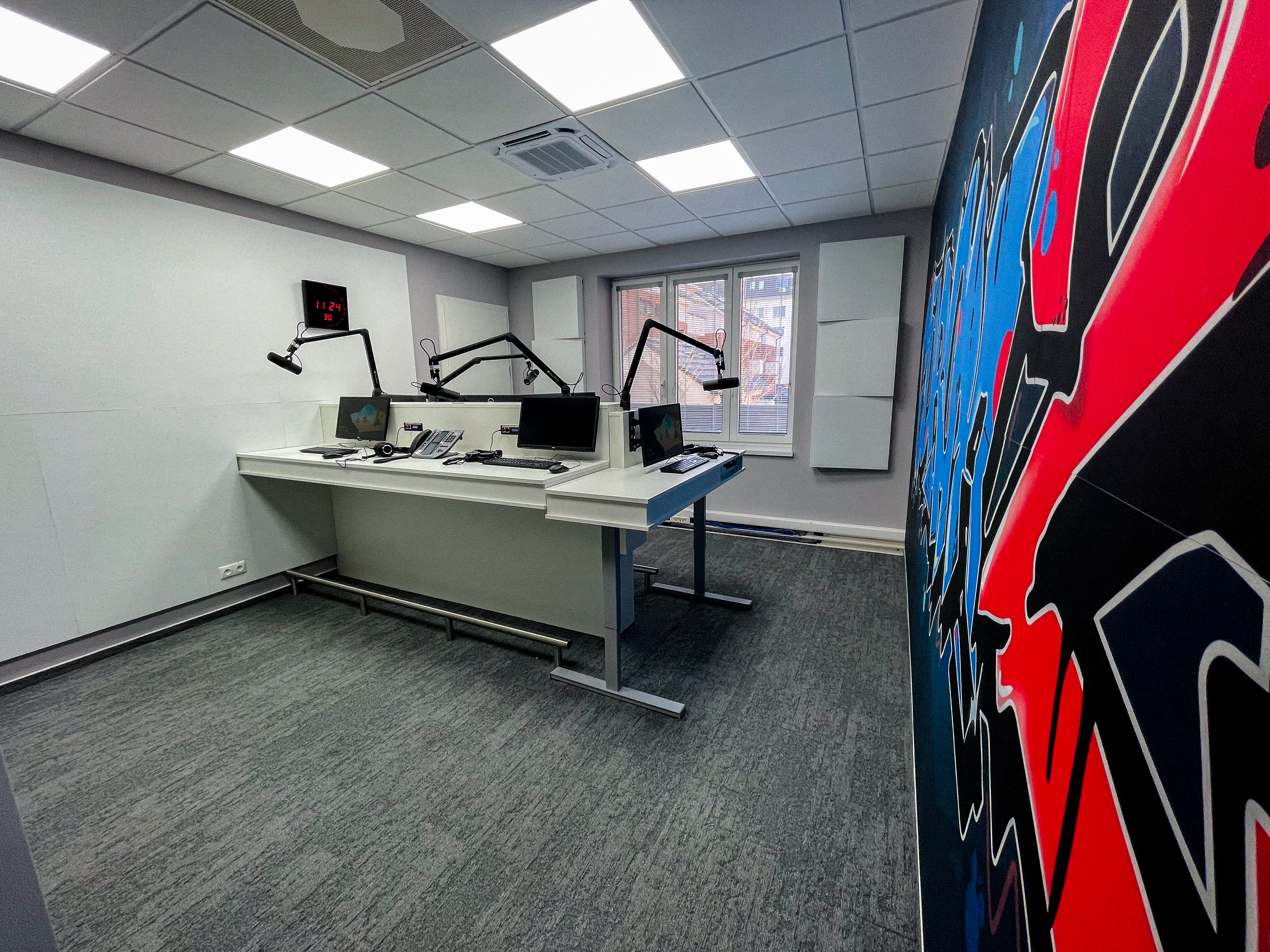
The name of the room is a weak indicator. Two more useful signs can usually be assessed from the floor plan and photographs.
Tiered seating. According to MediaTech technicians, tiered seating calls for simulation, including room-acoustics simulation. Listeners sit at different heights and distances from the sound source, so this type of seating requires coverage uniformity to be checked.
A predominance of hard reflective surfaces, such as glazing or concrete. In this case, room acoustics are simulated. This is different from coverage simulation, which focuses on loudspeaker placement. Here, the objective is to understand the room itself and what happens to sound after it reflects from surfaces.
Neither of these signs automatically means that a full acoustic study must be ordered. They are reasons to ask the supplier how room acoustics are being addressed in the design. If they cannot answer that question, the design is being based on estimation. We explain how to recognise whether a design is based on the actual room or primarily on catalogue parameters in our article on sound system design based on a catalogue or the space.
Why reverberation time is not measured in meeting rooms
MediaTech does not normally measure reverberation time in meeting rooms. The reason is that the behaviour of this type of space can usually be estimated, so the measurement would not change the design decision.
A meeting room has a limited volume, a relatively regular shape and predictable surfaces. From its dimensions and materials, a technician can estimate how the space will behave and can apply acoustic treatment comparatively easily. A measurement would simply confirm something that can already be derived beforehand without adding anything meaningful to the decision.
For this reason, there is normally no benefit in paying for either a full study or acoustic measurement for a meeting room. If a supplier proposes both for a single room with a complete system package, ask what the results would actually change in the design.
What is done in smaller spaces instead of a full study
For smaller spaces, the technician creates an acoustic model. The physical dimensions of the room and its wall surfaces are entered into the model, together with the acoustic material proposed for the walls.
The model then generates a graph showing conditions before and after the acoustic treatment is applied. This allows you to compare how the room behaves today with how it should behave after treatment, without anyone needing to visit the room with measurement equipment.
MediaTech uses a model from Vicoustic for this purpose and also specifies and supplies Vicoustic acoustic panels. The output provides a basis for deciding how much acoustic treatment makes sense for the room.
For meeting rooms and ordinary commercial spaces, this model is sufficient for deciding on acoustic treatment. A full study is not carried out at this scale because room behaviour can be estimated from dimensions and surfaces. We explain when the answer is acoustic treatment and when it is the sound system itself in our article about acoustic treatment versus a more powerful sound system.
Who prepares the study and why it matters
MediaTech’s acoustic studies are usually prepared by a specialised external partner with whom the company works. The study is prepared together with acoustic measurements of reverberation time and speech intelligibility.
For the client, this has one practical consequence. The study has its own schedule and its own price, and it should therefore appear as a separate line item in the proposal.
The study can also be ordered as a standalone service without purchasing the AV equipment from the same supplier, including when the work is carried out by an external partner. It remains a paid service in that case. Design supervision of the implementation can likewise be ordered separately from the equipment supply.
How to include it in the project brief
Three points are enough to remove most ambiguity when comparing proposals.
- State whether you require an acoustic study or whether you want the supplier to assess whether one is necessary. If you leave the decision to the supplier, require an explanation regardless of whether the answer is yes or no.
- Request a separate price. An acoustic study is a separately paid service and should therefore appear as an individual item rather than being hidden inside the technology price.
- Specify when the study must be completed. Its findings can only be incorporated into the room while surfaces and suspended ceilings can still be changed.
We explain what the project documentation itself should contain, where such documentation forms part of the project, in our article about what an AV project must include. Additional criteria for evaluating the supplier are covered in our article on how to choose a sound system supplier.
Frequently asked questions
Does an auditorium need an acoustic study? The fact that it is not a theatre or cinema does not decide the answer. What matters is the character of the space rather than its label. Look at whether it has tiered seating and whether hard reflective surfaces dominate. If so, room acoustics should be addressed in the design and it is reasonable to ask the supplier how they intend to do that.
Is it a bad sign if a supplier says an acoustic study is unnecessary? Not necessarily. A supplier who explains why your particular space does not require one may be giving you a competent answer. A refusal without explanation is a warning sign, but so is proposing a study for every project without distinguishing between different scales and room types.
Am I paying for the acoustic study twice? If you ordered a study separately and it appears again in the technology proposal, ask for a breakdown. The acoustic study and sound system design are two different services and should be ordered and charged separately. If the study appears in both documents, either they refer to two different deliverables or there is a duplication. One question should clarify which.
What if the room has already been built and the acoustics are poor? Acoustic measurement and a treatment proposal can still be carried out afterwards, but some solutions may no longer be available because surfaces and suspended ceilings have already been completed. This is why a study is ideally carried out while those elements can still be changed. For a smaller room, an acoustic model showing conditions before and after treatment may be sufficient.
Can an acoustic study be ordered without buying the equipment? Yes. This also applies when the study is prepared by an external partner. It is a separately paid service and is not tied to whoever later supplies the technology. Design supervision can likewise be ordered separately. This provides professional oversight even when the implementation is awarded to another supplier.
Who actually prepares the acoustic study? MediaTech’s acoustic studies are usually prepared by a specialised external partner with whom the company works, together with acoustic measurements of reverberation time and speech intelligibility. For the client, this means that the study has its own schedule and price and appears as a separate item in the proposal. Room-acoustics simulation within the study is carried out using EASE.
Next step
If you are preparing an auditorium, hall or other large-volume space and are unsure whether an acoustic study is necessary, the answer depends on the character of the room and the required level of speech intelligibility. Send us the floor plan and tell us how the space will be used, and we will assess whether we consider an acoustic study necessary.
Email us at mediatech@mediatech.sk or call +421 2 20 999 700.