How To Standardize Global AV Deployments In 2026




What AV Standardization Means Across Global Locations
Standardization does not mean identical. A conference room in Tokyo and one in Houston may use different hardware based on regional availability, local compliance requirements, or room dimensions. Standardization means the user experience, support structure, and documentation are consistent across all of them.
A standardized global AV deployment covers three layers:
- Experience: end users in any location can walk into a room and operate the technology the same way, with the same interface logic, input behavior, and display layout.
- Support: when something breaks, a defined escalation path exists. The team follows consistent response time expectations. Help desk and onsite support run the same process globally.
- Documentation: every site maintains accurate, up-to-date records of what is installed, how the team configured it, and how to maintain it going forward. That documentation lives in one place, not scattered across regional project folders.
Without all three, you get consistency in some locations and chaos in others. The goal is to make location irrelevant to the end user.
Why Global AV Standardization Fails
Most organizations that struggle with standardization are not failing because of the technology. They fail because of coordination.
Here is where things typically break down:
No single point of accountability. When separate regional integrators each run their own project management processes, documentation standards, and spec interpretations, small differences accumulate quickly. Nobody owns the global view, so nobody catches the drift until it becomes a problem.
Spec drift. A local team in one country adapts a design standard that was clear somewhere else. They swap in different hardware without documenting the change. By the time the rollout completes, the 40 rooms that were supposed to be identical are running five or six different configurations.
Unclear support handoffs. Different teams often handle integration and ongoing support. When nobody defines the support structure before installation begins, gaps open up. A ticket lands in the wrong region, or escalation means navigating three separate vendor relationships instead of one.
Local compliance and logistics surprises. Import regulations, electrical standards, local permitting, and language requirements all vary by country. An integrator without a genuine local presence turns those details into expensive problems late in the project, when the schedule has no room for them.
The pattern is consistent: organizations underestimate the coordination complexity of global deployments and overestimate what a single integrator with remote teams can deliver across markets they do not know well.

The Building Blocks of a Standardized AV Deployment
Getting to a genuinely standardized global AV environment requires work before any hardware ships. Organizations that do this well invest in four areas:
A defined room standard. Before deployment begins, document what a standard room looks like at each size tier: small collaboration space, mid-size conference room, large boardroom. Define the technology stack for each, the acceptable regional substitutions, and the configuration baseline. Every integrator in every market works from that document.
Certified integrators in each market. Local expertise matters. An integrator who knows regional permitting, supplier relationships, and logistics will outperform a centrally deployed team that is unfamiliar with that market. The key is pairing local expertise with a shared process, not just good intentions.
A central coordination layer. Someone needs to own the global view, whether that is a dedicated person or a small team, responsible for proposal alignment, cross-market communication, and consistent spec application. Without that function, regional teams default to their own methods.
Post-installation support that matches the deployment. Support coverage needs to follow the footprint. Thirty locations across 15 countries means your support model reaches all of them with consistent SLAs, not just the markets where your primary integrator happens to have staff.
What to Look for in a Global AV Deployment Partner
Choosing the right partner for a global AV rollout comes down to a few specific capabilities. Evaluate these directly rather than taking coverage claims at face value.
Verified local presence, not just coverage claims. Many integrators say they can work globally. Fewer maintain actual offices, staff, and supplier relationships in the markets you need. Ask specifically about the last three projects they completed in your target regions.
A defined deployment process. How does the partner coordinate between multiple local teams? What documentation do they produce at each phase? A partner who cannot answer these questions in detail will not deliver consistent results across markets.
Proprietary standards or certifications. Partners who develop and enforce their own certification standards make a structural commitment to consistency. That is fundamentally different from relying on individual project managers to maintain quality through effort and judgment alone.
Integrated support from day one. The strongest global deployments treat support as part of the project scope, not an afterthought. Before the first site goes live, your partner should define the post-installation support model, including help desk access, remote monitoring, and onsite dispatch coverage.
How PSNI Global Alliance Approaches Standardization
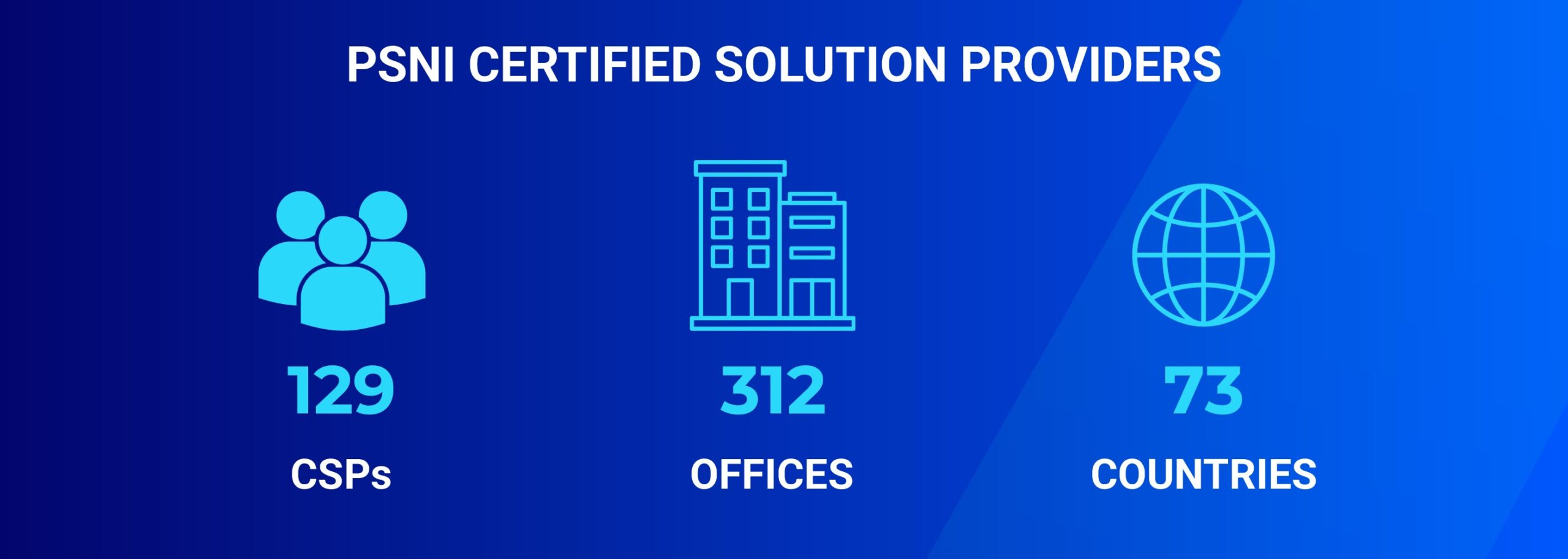
PSNI Global Alliance was built specifically to solve the coordination challenge that global AV deployments create. The Alliance connects organizations with Certified Solution Providers in more than 300+ licensed offices across 70+ countries, all operating under a shared set of proprietary standards.
Three mandatory certifications drive that consistency. The Certification for Global Deployment standardizes how every CSP plans, executes and documents projects across locations. The Certification for Global Services establishes a shared baseline for post-installation support, including response expectations, communication standards and collaboration between providers in different markets. The Certification for Quality Assurance creates a consistent framework for quality throughout the project lifecycle—from planning and installation through system verification, documentation and handoff. Together, these certifications ensure every PSNI CSP works from the same expectations, making consistency a requirement of Alliance membership rather than a promise left to individual teams.
The Global Deployment process runs on a concierge model. PSNI identifies a lead source integrator for each project, coordinates proposals and pricing across all relevant CSPs, and maintains oversight through installation and testing. Every site follows the same documentation standard. Every end user receives the same level of training.
For IT teams managing multi-region rollouts, that means one point of contact, one proposal, and one accountable partner for the full project, regardless of how many countries are in scope.
Ready to build a consistent AV experience across every location? Contact us.
Frequently Asked Questions
What does it mean to standardize AV across global offices?
Standardizing AV across global offices means delivering a consistent end user experience, support structure, and documentation baseline at every location, regardless of country. Users walk into any room anywhere and operate the technology the same way. Support escalation follows the same process. Hardware configurations may vary by region, but the experience and the process behind it stay uniform.
Why is global AV standardization so difficult to achieve?
The core difficulty is coordination, not technology. Multi-site global deployments bring together multiple regional integrators, different local regulations, varying supplier availability, and no natural single point of accountability. Without a centralized coordination layer and a shared process that all parties follow, small inconsistencies in one market grow into systemic problems at scale.
What should a standardized AV deployment include?
A standardized global AV deployment requires a defined room standard for each space type, certified local integrators working from the same spec in each market, a central coordination function that maintains consistency across regions, and a post-installation support model with consistent SLAs everywhere. Teams should document each phase clearly and maintain a plan for ongoing monitoring and maintenance across the full portfolio.
How do you maintain AV consistency after installation?
Maintaining consistency after installation requires proactive support, not reactive troubleshooting. Organizations that sustain a consistent global AV experience use remote monitoring to catch issues before end users report them, route support through a help desk with defined escalation paths that reach every location, and conduct regular reviews of room performance and documentation accuracy across the full portfolio.
What role do certifications play in global AV deployment?
Certifications create a structural baseline that individual effort alone cannot reliably produce. When every provider in a network holds the same certifications, the process, documentation standards, and service expectations become part of the partner relationship itself rather than something each project manager enforces through judgment. For multi-region deployments, that built-in consistency is what makes reliable scale possible.