How to protect an AV equipment tender from inexperienced suppliers: 3 criteria for buyers
Reading time: 4 minutes
Quick summary
In this guide, you will learn how to require Tier 3 support, acoustic calibration, and international commissioning standards in an AV equipment tender to ensure your investment is not undermined by poor installation quality.
Investments in audiovisual technologies for meeting rooms sometimes end in frustration: video freezes, audio output is distorted or out of sync, and employees start avoiding the room altogether. Most buyers make the same mistake: they define what they want to purchase (hardware), but not how it should function (system integration).
If you want a reliable solution and to filter out bids from suppliers without engineering expertise, add the following three technical requirements to your RFP. It may help you avoid problems later:
- Guaranteed direct access to the manufacturer’s development support (Tier 3 Support)
- AV system configuration tailored to the acoustic properties of the space
- Delivery of the technical solution according to global standards (e.g., PSNI)
Require direct access to manufacturer technical support
Problem: when the “box” gets stuck
A typical IT reseller sells you discounted hardware and licenses, but when a complex software issue arises (e.g., incompatibility between camera firmware and a Microsoft Teams update), they redirect you to a generic support hotline. The result is weeks of a non-functional meeting room and endless warranty escalation processes.
Why it matters
A professional AV integrator must hold partner status that enables them to resolve issues within days, while communicating directly with the manufacturer. This ensures that even critical code or firmware issues can be resolved in hours rather than months.
What to write in your RFP:
“The bidder must demonstrate certified partner status for key technologies (e.g., Biamp, Shure, Crestron), ensuring priority access to manufacturer technical support. The bidder shall provide evidence of direct technical collaboration with the manufacturer’s engineering team for resolving technical issues.”
Define acoustic properties of the space, not just the number of microphones
Problem: the “aquarium meeting room”
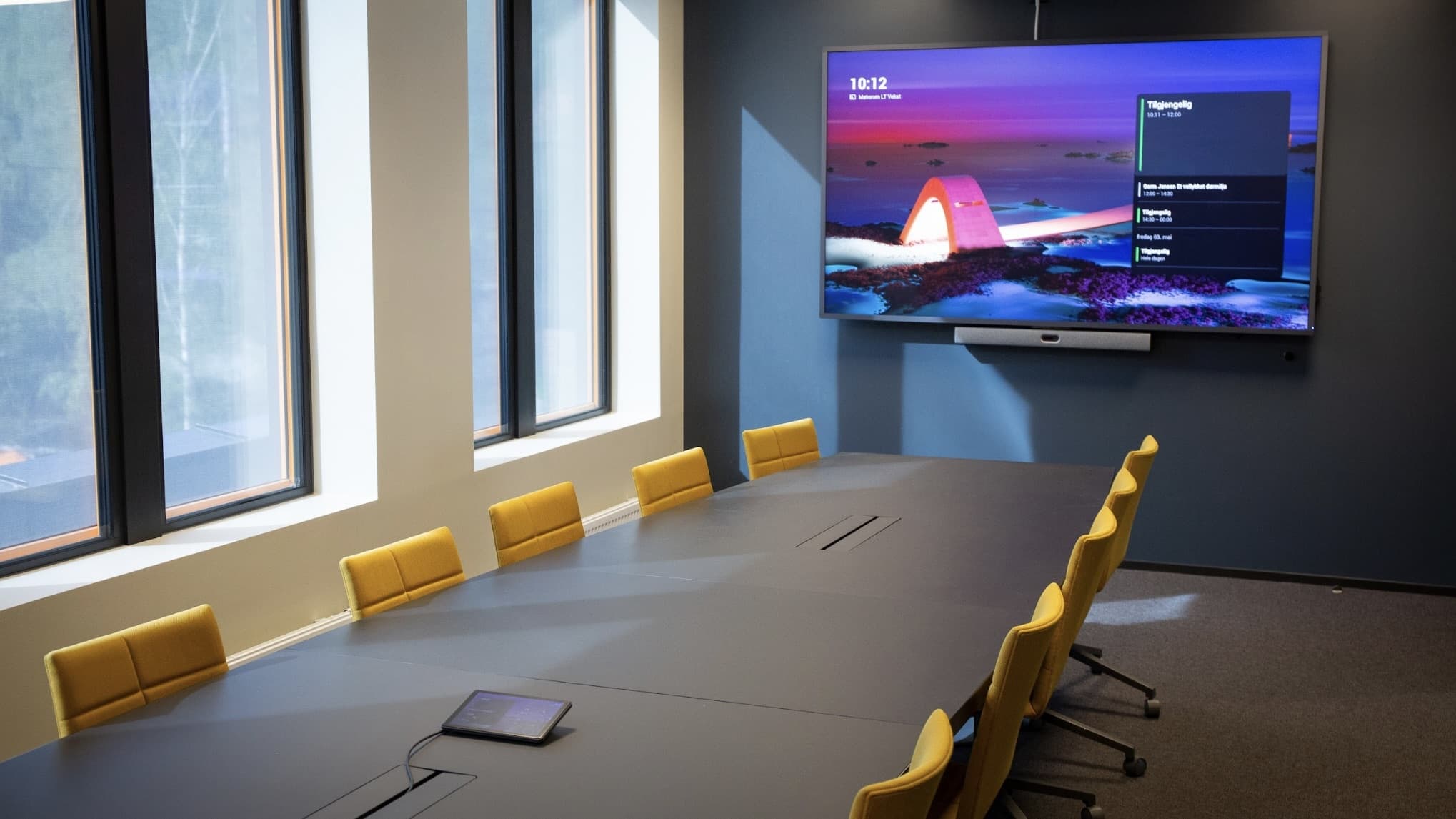
You can install the most expensive microphones in the world, but if the room has glass partitions and a concrete ceiling, without proper acoustic treatment and reduced reverberation time, the remote party will not hear you clearly. It is the responsibility of the AV integrator, when delivering AV technology, to account for the physical properties of the space, which significantly affect microphone pickup, speaker performance, and overall system quality.
Why it matters
Acoustic requirements in modern office environments are often overlooked, while client expectations are very high. Delivering AV systems requires precise DSP configuration that takes into account the acoustic characteristics of the space, which distinguishes professionals from inexperienced suppliers.
Which acoustic and spatial details should be resolved before the design stage are explained in the article on seven hidden details before designing video conferencing.
What to write in your RFP:
“As part of the delivery, professional software-based calibration of the acoustic signal chain must be performed in every room. After installation, the successful bidder shall provide a measurement report of acoustic parameters (e.g., STI – Speech Transmission Index) and the DSP processor configuration file confirming system tuning for the specific space.”
A typical supplier installs the equipment and switches it on. A professional must “tune” it to the physics of the space.
Require a global handover standard, e.g. PSNI Global Quality Assurance (GQA)
Problem: “It works… most of the time”
The biggest project risk arises after installation. A typical supplier hands over the system in a very simple way: “We’ve turned it on, the image is working, please sign here.” Real issues—such as microphone dropouts after an hour of conferencing or IP address conflicts—often only appear a week after the technicians have left.
Why it matters
Standards such as those defined by PSNI Global Alliance are strict checklists that integrators must complete before handing over an AV system. By requiring this process, you force the supplier to perform proper load and stress testing before your staff begins using the meeting room.
What these standards verify and what a medium-sized business gains from them is explained in the article on PSNI standards for medium-sized businesses.
What to write in your RFP:
“The bidder is required to deliver the project in accordance with internationally recognized AV integration process standards (e.g., PSNI Global Alliance methodology). The handover documentation must include a complete commissioning checklist of all functional tests performed, confirming system stability under full load.”
How to incorporate these criteria into a tender scoring matrix is explained in the article on evaluating AV integrators in a tender. What the specification itself should contain is explained in the article on the contents of an AV project.

Frequently Asked Questions on AV Tender Preparation (FAQ)
1. Why is evaluating only the lowest price not enough for AV technology?
The lowest hardware price often hides the absence of engineering services. Low-cost hardware without proper acoustic calibration and network management can lead to echo, audio dropouts, and unreliable performance, causing employees to avoid using the system altogether. As a result, the true cost—due to service interventions and lost productivity—often exceeds the initially cheaper offer.
2. What does “support” mean in the context of AV equipment?
It refers to the highest level of technical support, where the supplier has direct access to the manufacturer’s engineering team. Unlike a standard helpdesk, this enables issues such as software bugs or firmware problems to be resolved within hours, significantly reducing downtime in meeting rooms.
3. What are the risks of purchasing AV technology from a general IT supplier?
The main risk is a lack of expertise in spatial acoustics and signal processing. While IT suppliers typically understand network connectivity, they often cannot resolve issues such as reverberation in glass-heavy spaces or ensure seamless integration of multiple hardware brands into a single, fully functional system.
Don’t risk a non-functional meeting room
Preparing an AV tender is complex. If you send us your current RFP, we will review whether it includes the critical technical requirements that protect you from poor-quality implementation.