Room Acoustics: What It Is and When to Address It
Reading time: 7 minutes
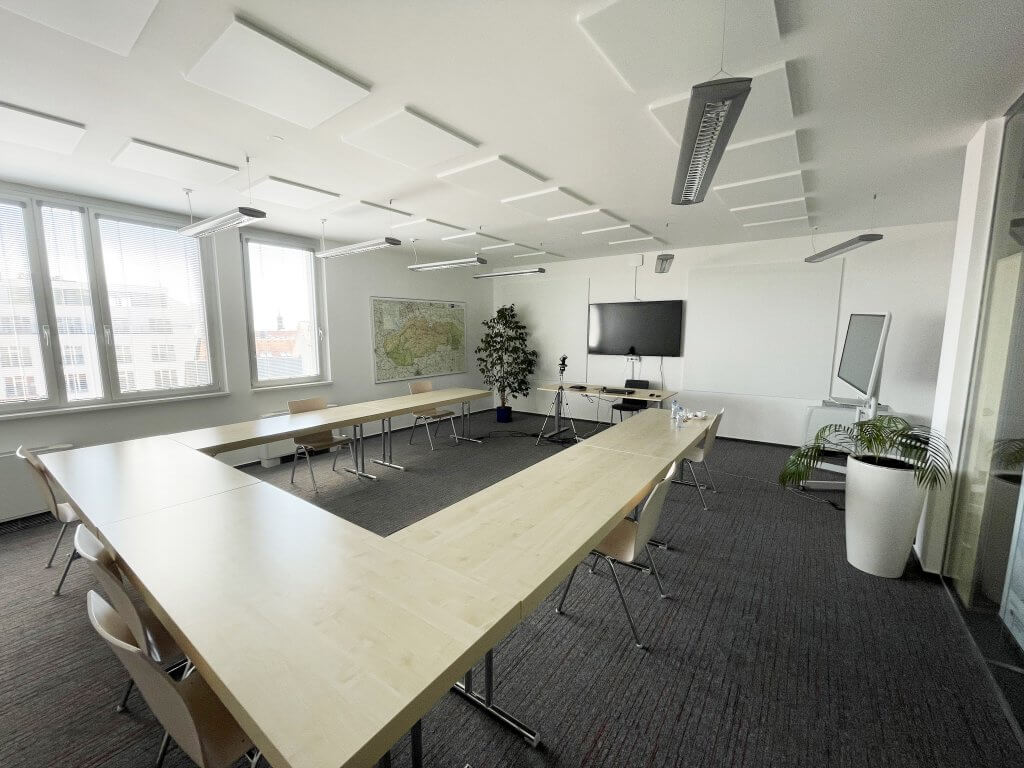
When planning a new space or refurbishment, the equipment list often starts taking shape before it is clear what the surfaces, ceiling and seating will be like or how the room will actually be used. Yet these decisions determine whether acoustics needs to be addressed as a separate part of the project.
Start addressing acoustics before designing the technology, while the purpose of the room, materials, ceiling, seating or layout can still change. Return to it when an existing space begins to be used differently or when the system works technically but does not deliver the expected result in normal operation. For the initial assessment, prepare the purpose of the room and how it will be used, the floor plan, photographs and information about the ceiling, surfaces, glazing, seating and furniture.
Quick overview
- What room acoustics means for sound-system design
- When to address acoustics in a new space or refurbishment
- When to address acoustics when the room’s purpose or layout changes
- When to revisit acoustics in an existing space
- What information to prepare for the initial assessment
- A timeline for including acoustics in the project
- What to do after the initial assessment
- Frequently asked questions
What room acoustics means for sound-system design
Room acoustics are determined by the materials and surfaces that absorb or reflect sound. This means the walls, ceiling, floor, glazing and even the way the room is furnished all matter. An important concept is sound decay. It describes how long sound remains audible in a room after the source has stopped. Absorptive materials shorten it, while hard surfaces return more sound back into the room.
What you need from the acoustics depends on the purpose of the room. Spoken content must remain intelligible in a congress hall. In a restaurant, the requirement may instead be pleasant background music. Two rooms with the same floor area can therefore have completely different requirements. The number of seats alone also does not determine when acoustics needs to be addressed.
For the project, the most important question is when acoustics enters the discussion. If surfaces, suspended ceilings and seating are selected without considering how the room will be used, the technology design later has to work with a situation that is already fixed. When acoustics is included in the brief earlier, the project team can identify what has already been confirmed and what still needs to be verified.
The complete sequence of decisions involved in sound-system design is described in our guide to sound systems for commercial spaces. This article focuses on one specific step: when acoustics should have its own place within the project.
When to address acoustics in a new space or refurbishment
For a new space, the right time is when you already know what the room will be used for but decisions are still being made about materials, the ceiling, glazing, seating and furniture. These are exactly the elements that are assessed in a commercial space. While they can still be changed, acoustics belongs in the project brief alongside them.
The first step is simple. Describe how the space will be used, show what it looks like and note whether acoustics remains unresolved before the technology is designed. At this stage, you are not yet ordering measurements or an acoustic study. That decision comes later.
For a refurbishment, separate what can still be changed from what will remain as it is. The project team can then determine whether it can work with the room surfaces and layout or whether the technology will need to be designed around an already completed room. Provide this information before specific equipment configurations are compared.
If preparation of the space also affects cabling, the suspended ceiling or the work of other disciplines, it becomes part of wider AV coordination within the construction project. An AV project is technical documentation for more complex implementations where several technologies are interconnected. Acoustics is one layer within this coordination. Neither the construction project nor the AV project replaces acoustic assessment.
When to address acoustics when the room’s purpose or layout changes
A room can remain structurally unchanged while taking on a completely new purpose. A space previously used for background music may, for example, become a presentation, training or meeting room. This changes what the sound in the room needs to achieve, so acoustics should once again become part of the assessment.
The same applies when seating and furniture change. Sound-system design considers how people are seated, how the room is furnished and where people will spend their time. A new layout therefore belongs in the assessment of both the room and the sound system. Recording it only as an operational note is not enough.
State in the project brief what the room was previously used for, what it will be used for in the future and what will change between the two. The supplier then receives a clear question: does the new use require acoustics to be addressed before the technology is selected? Without this information, they would be comparing equipment for the room in its previous configuration.
When to revisit acoustics in an existing space
An existing system may technically work while still failing to deliver what was expected during normal operation, such as intelligible speech or appropriate background music. This is a good reason to revisit acoustics. However, it does not automatically prove that the problem is caused by the room surfaces. The initial assessment should therefore describe the specific situations in which the result does not meet expectations.
Record what happens in the room, who uses the system and during which activity the result differs from what was expected. Include a floor plan and photographs. These help separate what is actually known about the room from assumptions about the technology. Also state whether the next step should assess the acoustic behaviour of the room, the system design and coverage, or both. The outcome of this first step is not yet the purchase of a specific device or material.
Our article Acoustic Treatment or a More Powerful System explains what to do next in a completed space. This article deals only with when acoustics should be revisited.

What information to prepare for the initial assessment
MediaTech needs to see the room, either in person or at least through photographs and a floor plan. The statement “we need a sound system for this room” is not enough. It does not explain what the system will be used for, who will operate it or which situations it needs to handle.
Prepare the following information for the initial assessment:
- Purpose and method of use. Describe what will happen in the room, who will use it and what they need from the sound system.
- Floor plan and current photographs. Photograph the complete space, including the walls, ceiling, floor, glazing, seating and furniture.
- What you already know about the room. Its size, ceiling height and type, surface materials and anything that will definitely remain unchanged.
- Planned changes. A new purpose, different seating, furniture, surfaces or layout, as well as decisions that have not yet been finalised.
- What is not working in the completed space. If the room is already in use, describe the specific activity during which the result does not meet expectations.
These materials show what has already been confirmed before the technology is designed and what remains unresolved. They do not yet provide a technical conclusion. For every unresolved item, therefore, identify who will confirm it and by when.
A timeline for including acoustics in the project
The timeline contains four checkpoints. Include them in the project brief and state at each point what has already been confirmed and what remains unresolved.
- When the purpose of the space is defined, record how the room will be used and what result you expect from the sound. Until this is clear, the technology does not have a fixed brief.
- When decisions are being made about surfaces and layout, attach the floor plan, photographs and plans for materials, the ceiling, glazing, seating and furniture. Mark anything that has not yet been decided.
- When the technology design is being prepared, confirm whether the initial assessment has closed the acoustic question or whether acoustics needs to be addressed separately. Only at this stage is it decided what additional verification may be required.
- When the use of the room changes or the completed result does not meet expectations, return to acoustics with updated information. A different purpose, seating arrangement or surface treatment changes the conditions inside the room even if the technology remains unchanged.
The project brief should therefore contain four things: the purpose of the space, its surfaces and layout, the status of acoustics before technology design, and the situations in which acoustics must be revisited. This makes it clear when somebody needs to decide whether the project requires further acoustic work without prescribing the solution in advance.

What to do after the initial assessment
This article ends with a project note that clearly states what remains unresolved in terms of acoustics, who will close those open points and by when, so that the decisions are complete before the technology is designed. The next steps are covered in separate articles about an acoustically challenging space, when you need an acoustic study and acoustic treatment versus a more powerful system. The timeline therefore does not replace those decisions.
Frequently asked questions
When should acoustics be addressed in a new-build project? Start addressing acoustics when you already know what the room will be used for but decisions are still being made about materials, the ceiling, glazing, seating or furniture. These are the elements assessed during the design process. The initial assessment determines whether acoustics needs to be addressed separately. Opening the topic does not mean you are already ordering an acoustic study or measurements.
What if we do not yet know all the surfaces during the initial design stage? Record materials, the ceiling or glazing that have not yet been decided as unresolved items and add a deadline for confirming them. If they change after the initial assessment, return to acoustics before the technology design is finalised. The design will then reflect the current state of the room.
Are a floor plan and photographs enough for the initial assessment? A floor plan and photographs are the foundation. They should be accompanied by the purpose of the room, how it will be used and any planned changes. In a commercial space, the assessment also considers the room size, ceiling height and type, surface materials, seating and furniture. These materials make it possible to determine what needs to be addressed, after which the assessment identifies what additional verification may be required.
Should acoustics be reassessed when furniture or seating changes? Changes to seating, furniture or layout alter the conditions on which the original assessment was based. If the way the room is used also changes, revisit the acoustics. This verifies whether the original brief still reflects the current room. It does not automatically mean that new acoustic treatment will be required.
Who should include acoustics in the project timeline? Responsibility should be recorded in the project brief. The managing director, facility manager or project manager provides the purpose of the room and how it will be used. The project team adds the status of the surfaces, ceiling and layout. Before the technology is designed, it must be clear who is responsible for closing any remaining acoustic questions.
What should remain after the initial assessment? The project brief should contain the purpose of the space, current source materials, a list of unresolved items, the responsible person and the deadline for the next decision. This keeps acoustics in the correct place within the project and prevents the technical solution from being determined prematurely. A specific acoustic treatment or technology proposal therefore does not necessarily need to exist after the initial assessment.
Next step
If you are preparing a new space, refurbishment or change of use, send us the purpose of the room and how it will be used, the floor plan, current photographs and a list of surfaces or layout decisions that are still open. For an existing space, also describe the specific situation in which the result does not meet expectations.
Send us the information for an initial assessment of the space.