Sound Systems for Commercial Spaces: A Complete Guide for Investors and Operators
Reading time: 24 minutes
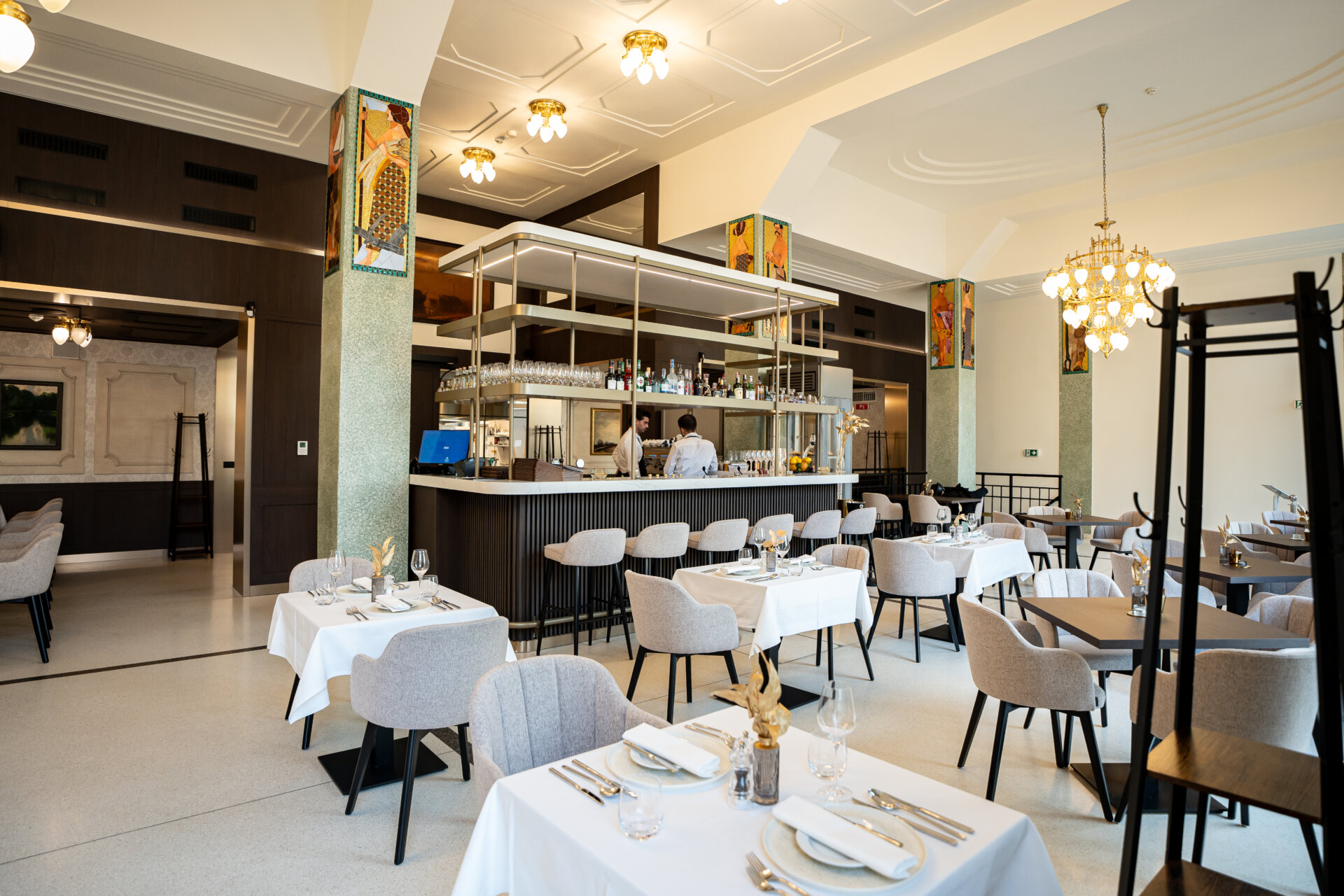
Sound behaves in a space according to physical properties that have been well understood for about a hundred years. When you place a loudspeaker in a room, the resulting listening experience is determined by the acoustic properties of that room, not by the loudspeaker’s catalogue parameters. The same loudspeakers sound different in two different rooms.
This is why commercial sound systems are difficult to choose. Air conditioning, networking or lighting are defined by standards and precise calculations. Their parameters correspond to real-world performance.
With sound, it is different. Catalogue parameters match the real result only minimally.
This guide will show you how we work with this reality in practice. We will look at when acoustics must be addressed in advance, when fine-tuning during the project is enough, and when investing more into technology is simply throwing money away. It is based on what we have seen over the years during installations.
What this guide covers:
- Why commercial audio projects sometimes fail
- The true cost of a sound system over seven years
- How room acoustics affect the technology design
- When to choose which sound technology
- Four moments that determine the outcome of an AV project
- Three layers worth understanding before sending an inquiry
- Segment specifics: where the rules change
- Questions we are asked most often
Why commercial audio projects sometimes fail
The acoustics of a space are determined by architecture. The shape of the room, ceiling and wall materials, volume and openings into other spaces all determine how sound will travel through the environment. These decisions are made during the design phase, where AV is rarely present. The architect does not usually deal with RT60 reverberation time, and the investor does not ask for acoustic measurement because it is not usually standard at the beginning of the construction process.
When the AV supplier arrives, they work with the space as it is. Not as it could have been if acoustics had been discussed six months earlier.
The second difficult point is budget. In construction projects, the AV item is very often set according to benchmarks from previous projects or rough estimates. These numbers become a ceiling within which the solution must then be found. A supplier who wants to win the project must fit into that amount. This dictates technology choices, compromises in sizing, and sometimes also the omission of steps such as acoustic measurement or predictive modelling.
The third point is the investor’s decision matrix. When buying a system, CAPEX — the purchase price — is usually compared. Costs that come later, such as energy consumption, IT time during failures and component life cycle, rarely make it into the offer evaluation. The integrator may talk about them, but if they are not part of the evaluation criteria, they do not influence the decision.
It is possible to work well within this framework, but not optimally. An optimal solution assumes that the discussion about the space, budget and criteria starts before they take their final form.
An optimal solution assumes that the discussion about the space, budget and criteria starts before they take their final form.
The true cost of a sound system over seven years
A commercial audio quotation typically contains three items: equipment, installation and calibration. This is the amount the investor compares with competing offers and usually uses as the basis for the decision. It works well in categories where the purchase price is a good indicator of total cost of ownership. In AV, it works worse.
A sound system in commercial operation has a lifespan of around ten years, with some components lasting significantly longer. During this period, it generates costs that are not included in the offer. A standard RFP asks for the price of supply and installation. It does not ask for the cost of ownership.
This difference between CAPEX and TCO, or total cost of ownership, is relatively small in other building categories. For air conditioning, heating or lighting technology, operating costs can be estimated fairly well from the parameters in the offer. In AV, operating costs are much more variable because they depend on factors that do not appear in the technical specification: how often the system is used, who uses it, how it is handled and what kind of space surrounds the technology.
What makes up the TCO of a sound system
Five items make up the TCO of a commercial AV system:
Purchase and installation. The amount from the offer. This is the only item known precisely before purchase.
Service and maintenance. Regular maintenance, replacement of consumable components and troubleshooting. In a professional system, this typically represents a few percent of the purchase price per year. With consumer audio that sometimes ends up in commercial operation, service costs are harder to estimate because the system often has no proper service channel.
Energy consumption. Audio systems in commercial operation are switched on for most opening hours. The difference between Class D amplifiers, which have a higher purchase price and lower consumption, and classic AB amplifiers, which have a lower purchase price and higher consumption, usually evens out over seven years and sometimes even exceeds the initial saving.
Staff time during failures. When the system fails, someone has to deal with it. This may be IT, the operations manager or an external technician. These are hidden costs that are often forgotten.
Replacement or upgrade. After a certain period, the system no longer meets current needs. Either it physically wears out or it no longer matches new operational requirements. In systems built on open standards such as Dante, upgrades are gradual and cheaper. In proprietary systems, the whole system often has to be replaced.
Why this is not included in the offer
The seven-year cost is not included in the offer for several reasons. The supplier knows their technology and can estimate its life cycle, but they do not know the client’s operation.
- Energy consumption depends on the usage profile.
- Service costs depend on whether the client has internal capacity.
- Replacement depends on how the client’s needs will evolve.
The second reason is that an extended quotation that would quantify these costs is more expensive to prepare. In a tender where CAPEX is compared, such an offer loses. The supplier who prepares it puts themselves at a disadvantage. The market is set up in a way that makes preparing more comprehensive offers unattractive.
Where this can be addressed
On the investor’s side, there are two ways.
The first is a requirement in the inquiry: explicitly ask for a TCO estimate over five or seven years, including energy consumption, expected service costs and component life cycle. This makes offers comparable in parameters other than just purchase price.
The second is a decision matrix that gives CAPEX less weight and TCO more weight. This is an organizational decision made before the inquiry: how the evaluation committee will assess offers. If the evaluation is set up to compare only the purchase price, the result will always reflect the purchase price.
None of these steps is automatic. They require preparation before the inquiry and sometimes communication between departments that otherwise handle budget and operations separately. But they are the only ways for the AV system decision to be based on its real cost, not only on its purchase price.
How room acoustics affect the technology design
Acoustics are addressed at different levels of depth depending on what a specific space needs. The approach to solving them follows from that.
Meeting rooms and smaller spaces
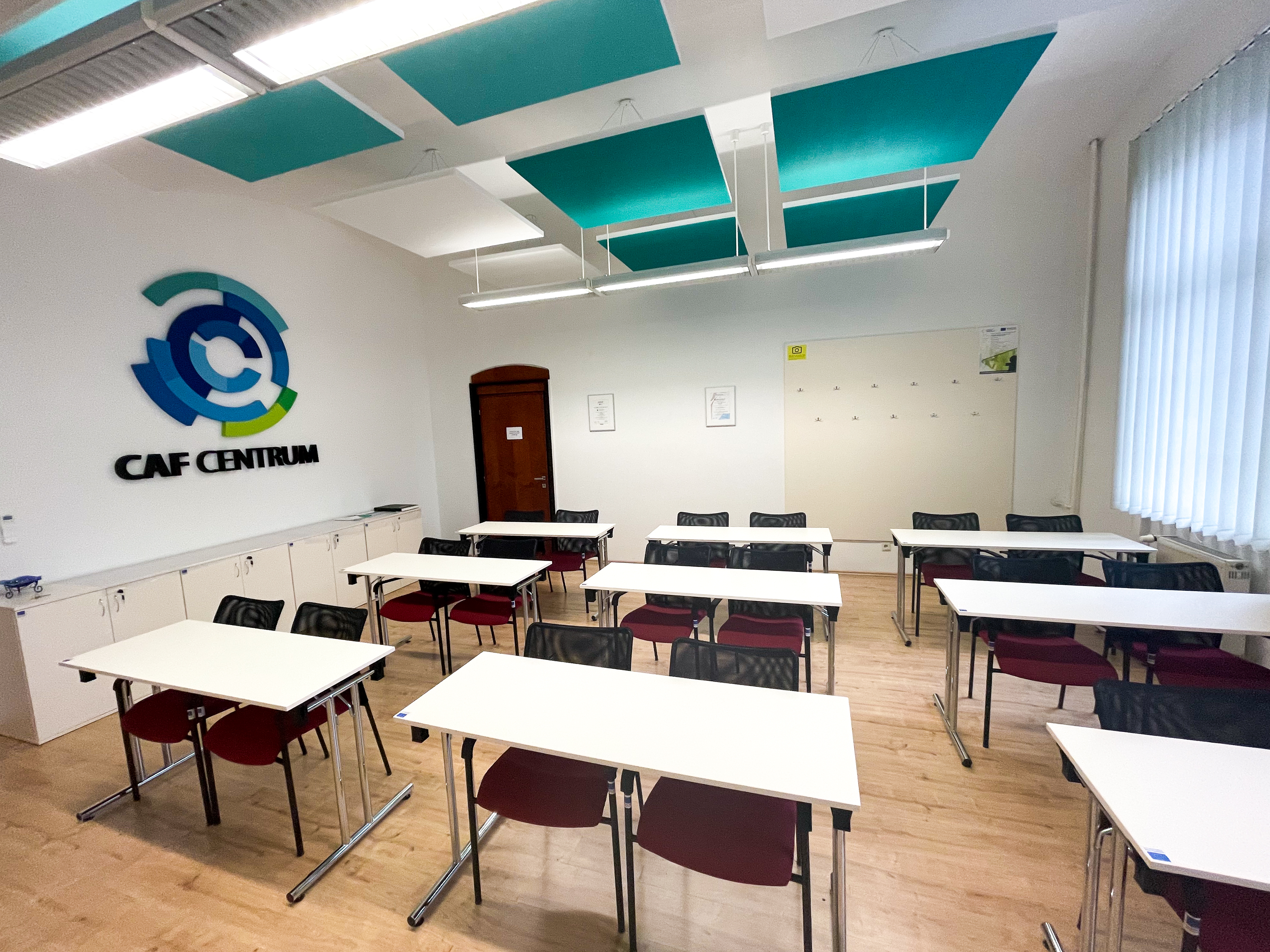
In meeting rooms and smaller office spaces, the acoustic logic is relatively clear. The main question is reverberation time, which tends to be longer than is suitable for speech when the room contains hard surfaces such as glass, plaster and bare floors. If this creates a problem, it is solved by treating surfaces with panels on the walls or ceiling, or by using curtains and carpets.
In these spaces, a model is created based on the physical dimensions of the room, surface materials and the proposed acoustic treatment. The model shows the expected state before and after treatment. In a meeting room, reverberation time is usually not measured because the values are fairly predictable and the acoustic treatment is straightforward.
Which technology belongs in each room size is explained in the AV technology configuration guide.
Commercial installations and multi-zone spaces
In restaurants, hotels and retail spaces, a different type of acoustic task is solved. The question here is not “how to treat the space”, but “how to cover the space evenly with sound using a specific loudspeaker layout”. This is where manufacturer simulation tools are used, such as MAPP 3D by Meyer Sound or NS-1 by Yamaha.
These tools calculate how sound from specific loudspeakers will travel through the space. The output is a coverage map showing where the sound will be even, where there will be shadows and where there will be excessive overlap. The design is then adjusted by moving loudspeakers, changing the model or changing the number of units until the map shows even coverage throughout the space.
This is the tool that replaces guesswork. An experienced technician can estimate coverage without simulation in simple spaces. But in more complex spaces with irregular layouts, multi-zone division or non-standard ceilings, guessing is practically impossible.
Large spaces with complex acoustics
In theatres, cinemas, concert halls and stadiums, acoustics are handled comprehensively. Coverage simulation or a simple acoustic model is not enough. An acoustic study is required. It is a separate service that includes physical measurement of the space, simulation in specialized software such as EASE and a proposal for acoustic measures in the interior.
An acoustic study is not part of a standard AV offer. It is usually carried out by a separate acoustic engineer or specialized company. The result becomes an input for both the architect and the AV supplier. For a large-scale project, this input is usually essential because without an acoustic study the AV supplier has no solid basis to design from.
What follows from this
When preparing an inquiry for an AV system, it is worth first considering which category the space belongs to. In smaller spaces, it is enough for the supplier to know how to deal with reverberation time and which acoustic material to use. In commercial installations, it is worth asking how the supplier verifies coverage: whether they use simulation software or design “based on experience”. In large spaces, it is reasonable to have an acoustic study prepared separately before compiling the inquiry, and not to ask the supplier to substitute for this task.
When to choose which sound technology
The choice of sound technology is more about architecture than brands. Three basic decisions form the system architecture: how sound gets to the loudspeakers, how it spreads from them, and how the system is controlled.
How sound gets to the loudspeakers
There are three basic ways to distribute an audio signal in a commercial building.
100V line systems
These are the most common systems for distributed sound. One amplifier powers dozens of loudspeakers connected in parallel on one line. Long cable runs are not a problem. This is suitable for hotels, retail, churches and car parks — anywhere with many loudspeakers and lower requirements for dynamics.
Low-impedance systems
These are used where sound quality in zones matters. Each zone has its own amplifier, shorter cable runs and more control. This is suitable for restaurants with an emphasis on music, fitness centres and event spaces.
Network audio
The most widely used standard is Dante. The audio signal is transmitted over an Ethernet network, similarly to data. This provides flexibility. Zones can be added without new cables, integrated with other systems and configured remotely. In larger buildings, multi-zone operations and buildings where AV is planned as part of the IT infrastructure, this is now standard.
How sound spreads from the loudspeakers
In the same space, the same number of loudspeakers with the same signal can behave differently depending on how the sound disperses from them.
Distributed sound
This is the most common approach. Loudspeakers are arranged in a regular grid, each covering a small part of the space, together creating an even field. It is suitable for ceilings with lower heights, up to around 4–5 metres, where spacing can be designed effectively.
Point-source sound
This approach uses one or several loudspeakers that cover a larger area. It is less demanding to install but requires precise sizing and aiming. It is often used in smaller spaces or as an addition to distributed systems, such as subwoofers or stage monitors.
Line array
This is a specialized approach for spaces with great depth, typically over 25–30 metres, or very high expected sound pressure levels, such as concert halls, stadiums and large congress halls.
Several vertically arranged loudspeakers create a continuous sound wave that retains energy over a long distance. A line array is suitable for a long hall.
In a standard meeting room or medium-sized auditorium room, it is over-engineering, meaning it is oversized for what the space actually needs.
At distances up to 20 metres, a point source is in the vast majority of cases a better choice both economically and acoustically.
How the system is controlled
An AV system is not hardware that is switched on in the morning and switched off in the evening. It is a system used every day, switched between modes and integrated with other building elements. The way this is done is the third design decision.
Local control
This is enough for smaller spaces with simple operation. A wall panel by the entrance, a touch display in the room, volume control and presets. For a meeting room or small restaurant, you do not need more.
Central control
This becomes necessary in multi-zone operations and buildings with several types of spaces. A hotel reception has a different mode from the restaurant, which has a different mode from the wellness area.
A central control system — most commonly Crestron and Q-SYS — unifies control of all zones into one interface and allows scenarios to be set for different parts of the day, event types or operational situations.
These platforms integrate not only audio, but also video, displays, lighting and air conditioning. That is why control is addressed early in larger projects, not added later as an extension.
How to decide correctly?
- Network audio makes sense only when the other AV layers, such as video and control, can benefit from it.
- A line array makes sense only in spaces that justify it.
- Central control makes sense only in operations that actually have something to control.
A good design handles these three decisions together as one system. A specification that deals with loudspeakers without a connection to the control architecture, or specifies Dante without an integration concept for video, is not yet a complete specification.
Four moments that determine the outcome of an AV project
An AV project closes gradually, in several phases during construction, and at each of these moments the space for decisions that can still change the result becomes narrower. At final approval, there is usually the least space. In the architectural design, there is the most.
This is an overview of the four moments that have the greatest weight in an AV project and where decisions are typically made that are difficult to change later.
Moment 1: Architectural design
Architects usually have no reason to deal with reverberation time, sound pressure distribution or loudspeaker placement. Their role is to design the space so that it fulfils its aesthetic and functional purpose. The AV layer enters the design later, often only when materials have already been selected and the layout is closed.
This is the moment with the greatest potential, but also with the lowest probability that it will be addressed. In construction projects, input from an AV consultant or supplier at this stage is not standard. In projects where the space is expected to have a complex acoustic or operational role, it is worth it.
Moment 2: Selecting the pool of AV suppliers
Before the tender itself, a decision takes place that is rarely formally identified as a decision. The investor, project manager or general contractor determines which AV suppliers will be invited to submit an offer. This selection is based on previous experience, recommendations, visibility in the segment or simply because the company is already in the address book.
From the perspective of the tender result, this moment is crucial because only someone who is invited to the tender can win it. If there is no one in the invited supplier pool who understands the specific type of space, the tender will end with the best offer from suppliers who do not understand it.
For the investor, this means that the pool of invited suppliers is worth considering just as carefully as the inquiry conditions themselves. Questions worth asking include:
- Does the supplier have references from a similar type of space?
- Have they completed a project of similar scope?
- What is their approach to acoustics and coverage verification?
These are the questions that show at first contact whether it makes sense to include the supplier in the selection.
Moment 3: Tender and inquiry process
In the tender, offers from the invited suppliers are compared. The decision is made based on criteria set by the inquiry process: price, technical specification, references, sometimes TCO or SLA. The quality of this decision depends on what criteria were set and what weight they have in the evaluation.
However, two types of errors usually appear here.
The first is an inquiry that is too narrowly focused on price and compares offers regardless of what differentiates them, such as equipment quality, acoustic approach or life cycle.
The second is an inquiry that is too technically prescriptive, specifying exact loudspeaker types and brands, thereby limiting the supplier’s room to propose an equivalent or better solution from another brand.
A well-structured inquiry defines the required result, not the specific solution. It specifies what the system should do in the space and leaves the supplier room to propose the path to that result. Evaluation is then based on comparing proposed approaches, not comparing numerical parameters in a specification.
How to structure the brief and scoring matrix is explained in the articles on protecting an AV tender and evaluating AV integrators in a tender.
Moment 4: Before ceilings are closed
The last moment with real influence on the result is the period before ceiling voids and walls are closed. After this point, cabling is difficult to change, loudspeaker positions are fixed and installation boxes are located where they were planned.
If it turns out that a loudspeaker needs to be added, a microphone array moved or a cable route changed, it will only be possible at a significantly higher cost, sometimes requiring cutting into finished surfaces and repairing walls.
In a well-coordinated project, the AV supplier is present at this moment and supervises the installation of cables, boxes and routes. In a project where this supervision is missing, the AV layer often has to adapt to what has already been done.
Three layers worth understanding before sending an inquiry
Choosing an AV supplier is not just about who has the lowest price. It is more important to assess whether the supplier understands the specific task they are supposed to solve in the space.
This can be verified through three layers that do not show up in the offer but do show up in the conversation.
How they understand the space
A supplier who understands the space asks questions about the space. About dimensions, materials, the daily operational profile and expectations from the sound system. A supplier who does not understand the space as well asks questions about the budget and what equipment should be priced.
Two suppliers may propose the same specification and each may arrive at it through a completely different process. For the quality of the result, the process matters more than the specification.
How they position themselves in the project
Some AV suppliers expect to receive a specification and deliver equipment according to it. Others can sit at the table with the architect and explain why it makes sense to change the ceiling material. Both types have a place in the market. But in more complex projects, the second type is usually essential.
The question that reveals this: “What does a typical project look like for you from first contact to handover?” An answer that talks about cooperation with the architect and general contractor means a different type of supplier than an answer about when the equipment needs to be delivered to the site.
What happens after installation
A system in commercial operation has a lifespan of around ten years. When making the decision, the question is rarely how the supplier will be available in year eight.
If the layout of the space changes after two years, if a zone needs to be added, or if a component is nearing the end of its life, these are situations that are not covered by warranty or contract. How the supplier approaches them determines whether the system will still fulfil its role in year ten.
Question: “What types of interventions do you carry out for clients one to five years after installation?” The answer shows whether the supplier sees the project as a closed transaction or the beginning of a long-term relationship.
How to use these layers
These layers reveal competence in a short conversation. The suppliers who pass this conversation should form the tender pool. Within that pool, it then makes sense to decide based on the offer and price, because the more important decision has already been made.
Segment specifics: where the rules change
The acoustics of a restaurant and the acoustics of a hotel reception are two different problems with different solutions. A sound system for a congress hall has different starting points than a sound system for an event space, even though both are essentially rooms with audio technology. These differences become visible in how the system is actually used: who uses it, when, why and with what expectations.
Here is a brief overview of six segments that dominate commercial AV and how they differ from one another.
Restaurants and hospitality
Restaurant acoustics are not primarily about sound quality. What matters most is how long the guest stays seated and how they feel while doing so. If the sound is too quiet, the guest hears conversations from neighbouring tables and feels uncomfortable. If it is too loud, they have to shout, which shortens the visit. A medium level, well distributed and adapted to the daily operating profile, may be technologically unobtrusive but operationally essential.
Hotels and resorts
A hotel is not one space, but a set of spaces with different requirements under one roof: reception, lobby, restaurant, breakfast room, wellness, conference rooms and sometimes an event space. Each has its own acoustic profile and operational needs. Central control and zoning are usually more important in a hotel than the sound quality in individual rooms. The design question is rarely “which loudspeaker?”. It is usually “how will all of this be controlled?”.
Universities and educational institutions
Educational institutions have one specific challenge: consistency across dozens of spaces. If a university has twenty lecture halls, each of them must function in a similar way so that a lecturer can walk into any of them and use it immediately. This is more a question of standardization and IT integration than acoustic design. Added to this is the public procurement process, which has its own rules and its own types of compromises.
Event and multifunctional spaces
An event space contains a built-in tension: one space is supposed to be used for completely different events. A concert requires high sound pressure and music-oriented sizing. A conference requires high speech intelligibility, often through microphones in a less favourable acoustic environment. A wedding lies somewhere in between. Optimizing the system for one mode means compromising another. The solution is usually not in the hardware but in presets — several pre-prepared configurations that the operator recalls according to the event type.
Historic and design spaces
In historic and design spaces, technology is subordinate to the space, not the other way round. The loudspeaker must either be invisible or look like it does not disturb the environment. Acoustics are usually difficult because of hard materials, high ceilings and long reverberation times. Installation restrictions are added, especially in protected heritage buildings. The design is built around compromises, and the final system is often hybrid: either recessed loudspeakers where they are sufficient, or classic loudspeakers where there is no other option.
Corporate auditoriums and congress halls
A corporate auditorium differs from a congress hall less than it may seem. Both spaces primarily serve to convey spoken word, with occasional presentation or audiovisual extensions. The main challenges are speech intelligibility at different occupancy levels, integration with conferencing systems and, increasingly, hybrid mode, where some participants are in the hall and others connect remotely. A quality system in this segment requires more thinking about how the meeting actually takes place than about loudspeakers.
How to design an auditorium for hybrid operation is explained in the dedicated article on hybrid conferences in auditoriums and congress halls.
In addition to these six segments, we also regularly work in retail chains, fitness and wellness centres, and church or community spaces. Each has its own specific logic. Retail deals with scale and consistency across stores, fitness works with higher sound pressure and humidity, while church spaces usually involve complex acoustics and a limited budget.
Questions we are asked most often
These questions are repeated in conversations with investors and project managers. The answers are concise, with references to deeper sections where the topic relates to a specific decision.
How much does a sound system for a restaurant, hotel or auditorium cost?
The price of a commercial sound system falls within a range that depends on several variables: the size of the space, the number of zones, the type of technology used and the level of control. Some indicative ranges:
- Medium-sized restaurant with 2–3 zones: from €2,500 for a basic solution, €10,000 and above for design-focused venues with intelligent control and music production.
- Hotel sound system: from €10,000 for smaller hotels with standard coverage, €30,000 to €100,000 and above for larger properties with multi-zone control and integration.
- Lecture halls and auditoriums: from €5,000 for basic spoken-word sound reinforcement, €30,000 and above for large halls with full AV integration.
For a specific project, a design based on the space is required. Prices are indicative and do not include construction work or acoustic interior treatment.
What is the difference between a 100V and a low-impedance system?
A 100V system is a line system where one amplifier powers dozens of loudspeakers connected on a single line. It is suitable for distributed sound with lower requirements for dynamics, such as hotels, retail and churches.
A low-impedance system powers each zone separately, with shorter cable runs and more control over quality. It is suitable for spaces where sound quality in individual zones matters, such as restaurants, fitness centres and event spaces.
The choice is determined by the scope and type of operation, not by preference. More detail is available in the section on the three decisions when choosing technology.
What is Dante and when do I need it?
Dante is a network audio protocol in which the audio signal is transmitted over an Ethernet network, similarly to data. Its main advantage is flexibility: adding zones without new cables, integration with other AV systems and remote configuration.
Dante makes sense in multi-zone operations, larger properties and buildings where AV is planned as part of the IT infrastructure, such as hotels, congress centres and universities. In smaller spaces with one or two zones, Dante is usually unnecessary.
What is the life cycle of a professional sound system?
The lifespan depends on the component category.
Loudspeakers and microphones in professional versions can serve for 15 years or more.
Amplifiers and control systems are typically renewed earlier because their development is faster.
Acoustic room treatments, such as panels and absorbers, have a long life exceeding 15 years if interior conditions are maintained. In environments with higher humidity, dust or direct sunlight, their lifespan is shorter.
Consumer audio in commercial deployment shows a 30–50% shorter lifespan because it is not designed for continuous operation.
Detailed tables for individual AV equipment categories based on PSNI Global Alliance standards are available in our article How long AV equipment lasts in a meeting room.
What is the difference between consumer and installation audio?
Consumer audio, such as Sonos, Bose Home or regular home loudspeakers, is designed for several hours of daily operation in a protected home environment.
Installation audio is designed for continuous operation, higher humidity, dust, temperature fluctuations and physical strain typical of commercial spaces.
The difference shows in purchase price, but also in lifespan and service availability.
Consumer systems typically become obsolete after 5–7 years, often because of software limitations, such as smart speakers without update support. Installation systems in comparable quality serve for 15 years or more.
Installation systems are, of course, significantly more expensive because they include more durable hardware, technology for long cable runs and often IP certification. Their lifespan is also significantly longer.
The third key difference is service availability.
Consumer brands often rely on replacement systems, one unit for another, during warranty. Outside warranty, repair is often uneconomical.
Installation brands have established distributors and authorized service even years after installation.
When is the best time to involve an AV supplier in a construction project?
Ideally during architectural design — at that stage, materials, layout and infrastructure are being decided, and these determine the acoustic properties of the space. The latest reasonable involvement is during the tender for the general contractor, while construction decisions are still open.
After the project documentation is closed, the space for optimization narrows. More detail is available in the section on the four moments of a project.
I am already at the project documentation stage. Is it too late?
It is not too late, but there is less room for decisions. At this stage, it is still possible to influence the choice of materials, distribution architecture, control layer and integration with the rest of the AV infrastructure. What can no longer be influenced is the layout of the space and its acoustic foundations.
A short qualification conversation with an AV supplier at this stage will show which open decisions will have the greatest impact on the system outcome.
How do I recognize a good AV supplier?
Through three layers: how the supplier understands the space, whether they ask questions about it or only about the budget; how they position themselves in the project, whether they can sit at the table with the architect or only deliver equipment; and what happens after installation, whether they stay in contact or see the project as a closed transaction. These layers are revealed in a short conversation before including the supplier in the tender.
More detail is available in the section on the three qualification layers.
I have a tender. How should I write the technical brief?
A good brief defines the required result, not the specific solution. It specifies what the system should do in the space — coverage level, speech intelligibility, number of zones, operating modes and integration with other systems — and leaves the supplier room to propose the path to that result.
A brief that includes specific loudspeaker types and brands narrows the process to a price competition between identical solutions instead of comparing approaches. More detail is available in the section on the tender and inquiry process.
Do you also provide acoustic studies, or only sound systems?
There are three levels of acoustic work:
A comprehensive acoustic study for large spaces with demanding acoustics, such as theatres, cinemas, concert halls and stadiums, is carried out through external partners. It includes physical measurement of the space, simulation in specialized software such as EASE and a proposal for acoustic measures in the interior. This is a separate paid service.
Coverage simulation for sound systems in commercial installations is done internally. We use manufacturer tools such as MAPP 3D by Meyer Sound or NS-1 by Yamaha, depending on the technology platform.
An acoustic model of a smaller space, such as a meeting room, is done internally using tools from acoustic material manufacturers such as Vicoustic. The model is based on dimensions, surfaces and the proposed acoustic treatment, and shows the expected state before and after application.
Next step
This pillar article is broad because the topic is broad. The practical next step depends on the phase you are in. These are the three situations we see most often in conversations:
You are planning a new project
If you are in a phase where the space, layout or initial budget is being decided, a short conversation can help identify which decisions will have the greatest impact on the result. No obligation, no tendering. The goal is to understand the project, not to prepare an offer.
It usually takes 30 to 45 minutes.
Arrange a conversation → mediatech@mediatech.sk
You need independent technical documentation for your project
If you are planning an installation above €50,000, a tender among several integrators or a complex multi-zone system, it is worth investing in an independent AV project. Not a free design that serves as a supplier’s pre-sales tool, but paid technical documentation that belongs to you.
Such a project includes CAD drawings, an electrical installation diagram, a bill of quantities and a cable specification. You can send it for pricing to any number of integrators, including us, or not use it in a tender at all and keep it as technical documentation for future extensions.
More about a paid AV project →
You have an existing AV system
If you operate an AV system that works but you do not know when to renew it, what is already beyond its life cycle and where the critical points are, there is a structured process for that. An AAVS audit is a service where a technician physically tests the condition of the system, validates compatibility and identifies renewal priorities according to PSNI Global Alliance standards.
The output is a report with prioritized recommendations that serves as a basis for investment planning.
Order an AAVS audit → mediatech@mediatech.sk
If you are not sure which of these situations matches your case, contact us through the standard channel — a short email or phone call is enough to get oriented.
MediaTech Central Europe, a.s. +421 220 999 700 | mediatech@mediatech.sk