What Does a Video Conference Room Really Cost? Calculating the True TCO
Reading time: 5 minutes
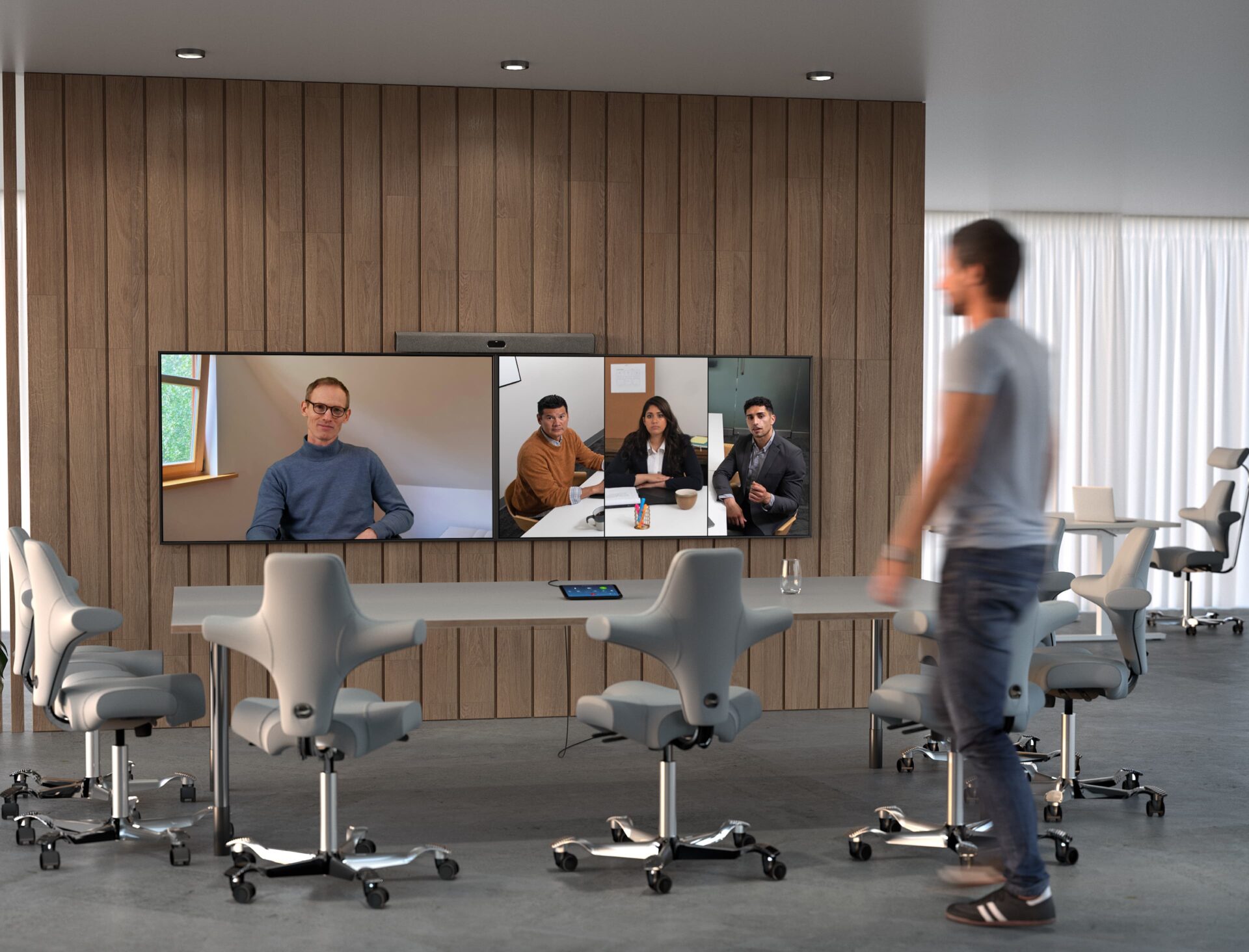
The purchase price of hardware is just the beginning of the story. The real difference in costs (TCO) becomes apparent over the years, when stability and the time saved by your IT team often outweigh the initial savings from a lower purchase price.
It is completely natural that, when selecting video conferencing equipment, most companies first look at the invoice for the hardware itself. Budgets are limited, and the effort to find the most affordable solution is the most reasonable managerial response.
In practice, however, we often find with clients that the initial price doesn’t tell the whole story of what the equipment will cost over the following years.
In our meetings with IT managers and CFOs, we frequently discuss how to better prepare for what comes after installation. Many appreciate walking through a TCO (Total Cost of Ownership) model together.
Our simple approach to calculating long-term costs over a five-year period looks roughly like this:
Total Costs = Initial Investment + Service and License Costs + Estimated Time Spent Resolving Unplanned Issues
| Cost Item | Standard Solution (Online Store) | Professional Infrastructure (with Monitoring) |
|---|---|---|
| Initial Investment | €3,500 | €6,500 |
| Service & Support (over 5 years) | €0 (handled by internal IT only) | €9,000 (€1,800 per year for proactive SLA) |
| Hidden Costs (over 5 years) | ~€7,500 (downtime and internal IT) | ~€0 (guaranteed stability) |
| Total TCO (5 years) | €11,000 | €15,500 |
The purchase price of hardware is just the beginning. The real costs only become apparent when you add up the time lost due to malfunctioning equipment.
Let’s look at both approaches and what they mean for you in the long run, breaking down exactly what the figures in the table consist of.
What is the TCO of a standard solution from an online store?
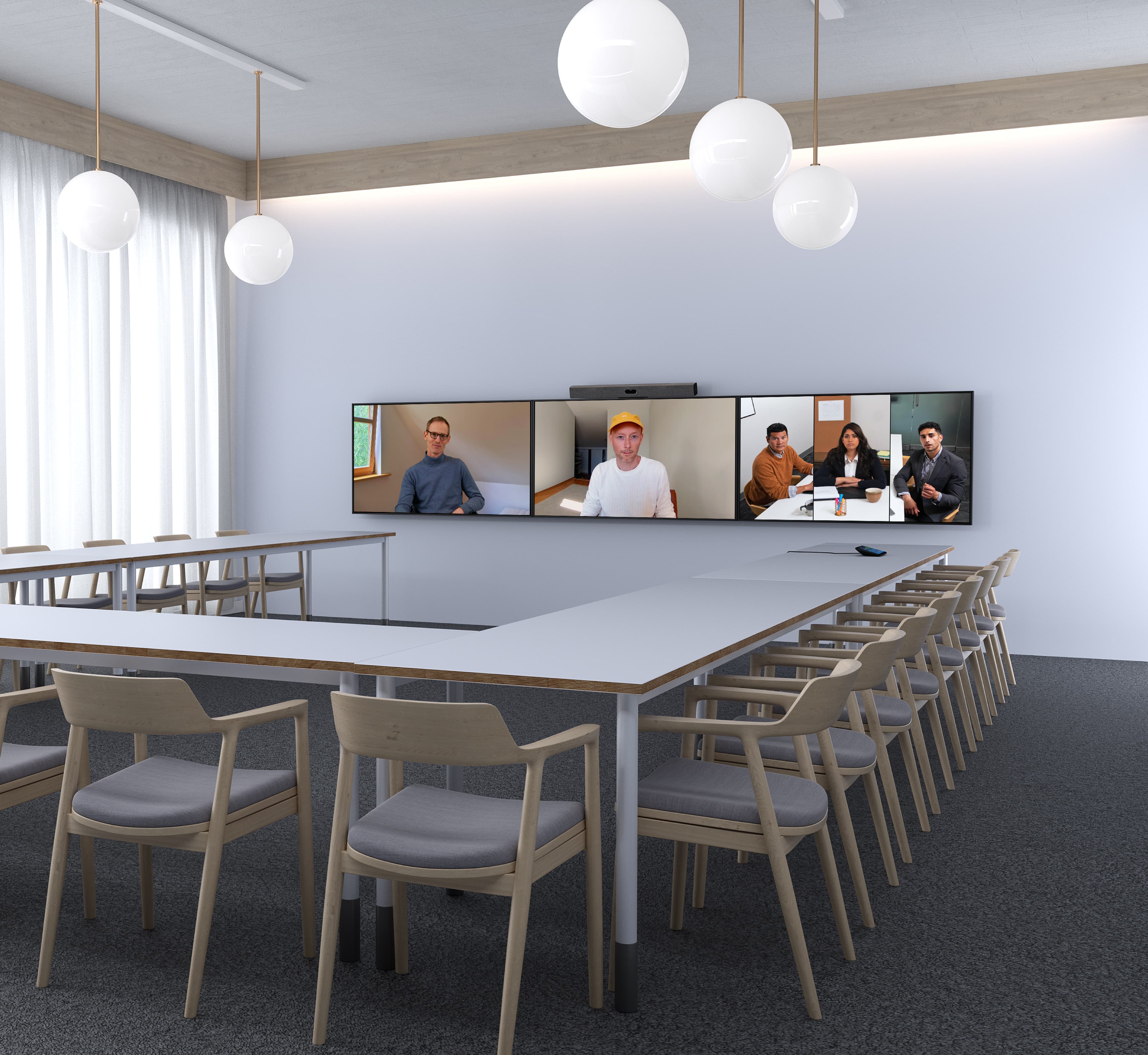
It’s understandable that many companies start by purchasing commonly available systems from their general IT supplier—a typical TV paired with a video bar and camera.
Approximate initial investment: €3,500
Service and maintenance: Often €0 (the system is set up so that if something breaks, internal IT handles it).
Lifecycle and failure curve: Instead of frequent minor issues, a typical solution tends to show three distinct phases:
- Month 12 (stability period): Everything is new and relatively reliable. Incidents are minimal, maybe 2–3 per year (mostly user errors as they get familiar with the equipment).
- Month 36 (first wear and tear phase): Cables start to loosen, connectors in tables get jostled, and the firmware of the camera or audio system may freeze after unexpected Windows updates. This is where “random unpredictability” occurs—an incident might happen roughly once every two months.
- Month 60 (moral and technical obsolescence): Hardware gradually struggles to meet the demands of newer video conferencing software versions. The screen may develop stuck pixels, and device fans can start to hum annoyingly.
Estimated 5-year TCO: While the starting point was €3,500, due to downtime (hidden costs) and problem-solving by internal IT specialists, the total bill after five years reaches at least €11,000.
The lost money primarily comes from wasted time. Let’s be realistic: if four key employees spend 10 minutes each, 10 times a year, looking for a cable, their mid-level hourly rates translate into real money quietly going out the window.
How much does a high-quality conference room with professional infrastructure cost?
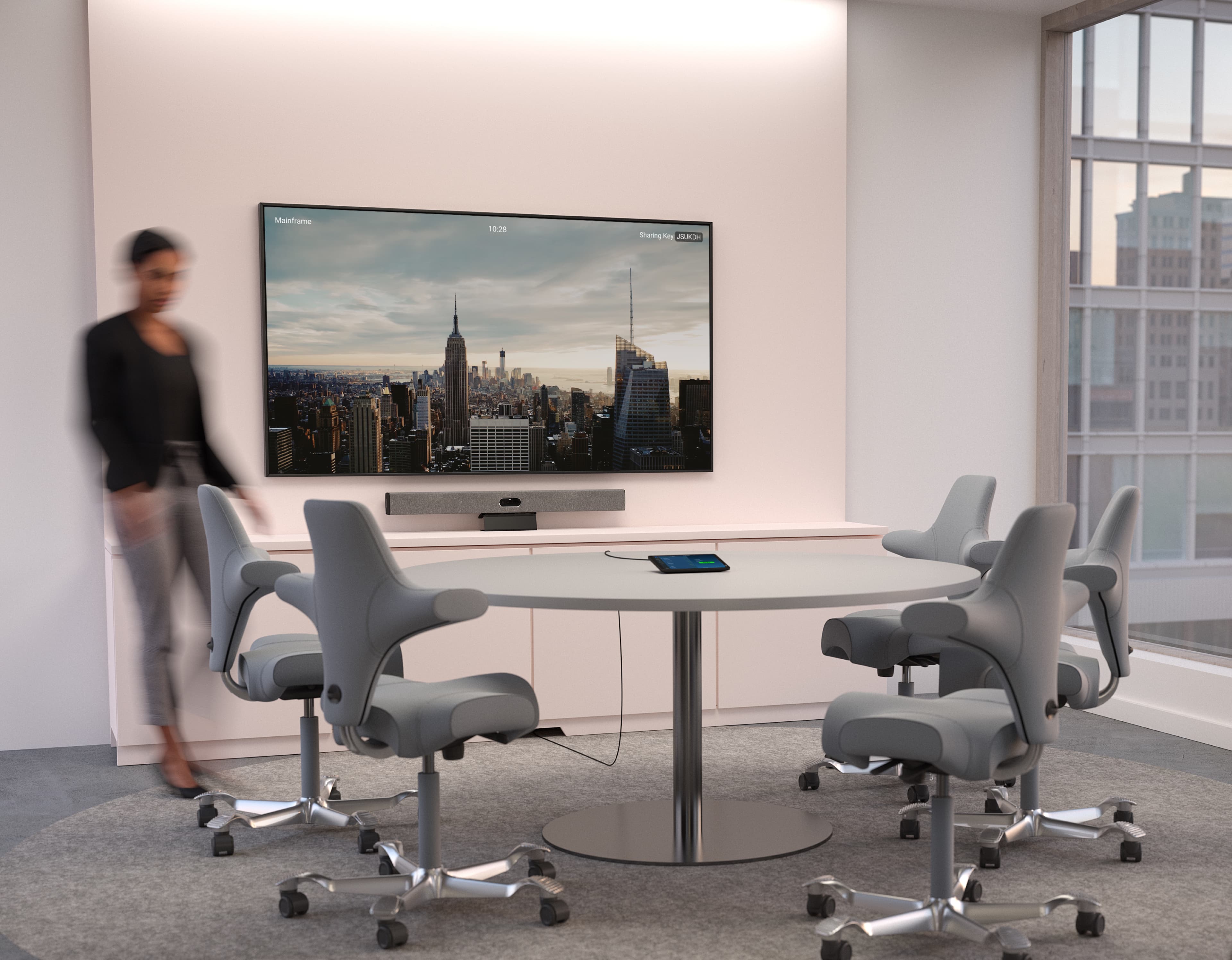
The second approach, which we patiently explain to our clients, is a system designed according to global AV standards (such as the strict engineering norms of the PSNI Alliance), where the goal is not just to sell hardware, but to ensure smooth, reliable operation.
This means it’s not just a “more expensive basic conference room.” Equipment is selected based on room acoustic simulations (taking into account factors like glass and echo) and precise camera angles relative to the table. Devices are certified for native operation with software platforms like Teams and Zoom.
Approximate initial investment: €8,500
(Professional display optimized for office brightness, high-quality acoustic sound system, ceiling microphones for perfect voice capture, zoned lighting, and professional engineering setup.)
Proactive service and SLA (over 5 years): €9,000 (~€1,800 per year)
This ensures continuous remote monitoring. For example, if we detect a minor network outage overnight, our technicians safely restart the system so that your 8 a.m. meetings run smoothly. Your managers’ time remains protected.
Estimated 5-year TCO: €17,500 (€8,500 initial investment + €9,000 five-year service).
With this approach, the company gains nearly 100% reliability, avoids hidden downtime, and internal IT can focus on real system development instead of connecting cables at the tables.
When does a cheap conference room make sense, and when is a professional solution better?
Let’s be honest: even a fully professional solution has its “buts.” For a company, this means a noticeably higher initial expenditure, the need to pay a regular fee for proactive monitoring (SLA), and the installation itself takes more time than simply unpacking a box and plugging in two cables.
A cheap solution is fine for a small brainstorming session, but it becomes expensive the moment a critical meeting freezes because of it.
On the other hand, a basic online-store solution can genuinely be the best choice in certain situations. If you’re setting up a small internal “huddle room” for two colleagues to quickly brainstorm, or a space that isn’t used for key video conferences—where occasional delays don’t cause financial or reputational issues—then a premium conference room would be unnecessary luxury. In such cases, a standard video bar will serve you better and more economically.
However, if we’re talking about rooms where the board meets, where negotiations on key contracts take place, or where you’re connecting teams with expensive hourly rates, a cheap solution quickly becomes costly in terms of lost time and technical failures.
Decisions about investing in conference technology should be based on real data and the company’s long-term needs. If you’re looking for a solution that will truly benefit your business, we are happy to consult with you, assess your spaces professionally, and provide a technical report. This way, you get a clear view of the options the market offers and can avoid unexpected operational costs in the future.