Why Do Microphones Produce Feedback in a Hall, and How Can You Fix It Without Lowering the Volume?
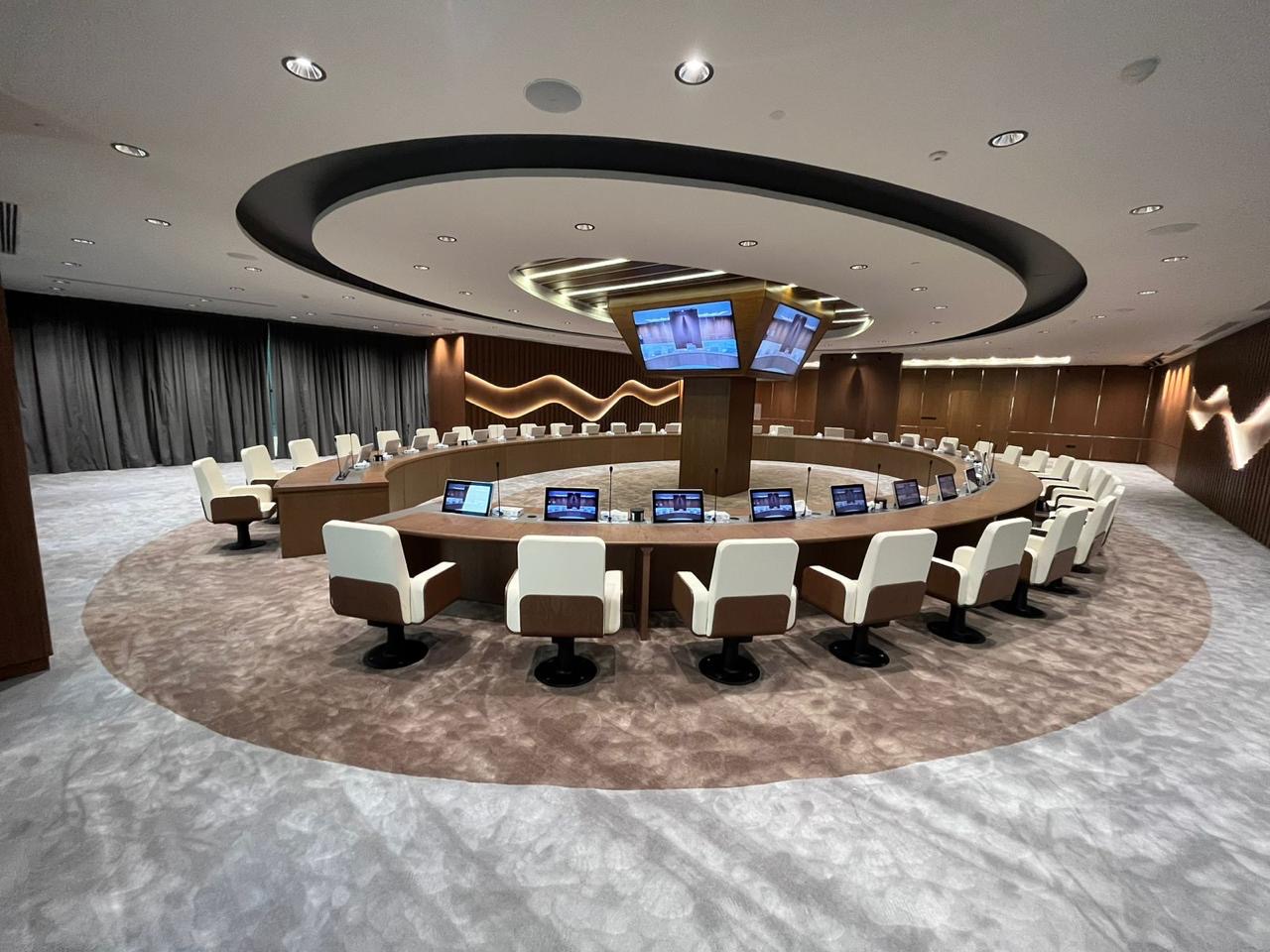
A speaker takes a breath before delivering an important point, and a piercing squeal suddenly cuts through the hall. The audience’s attention is gone in an instant—and so is the speaker’s authority.
We tend to blame the presenter for holding the microphone incorrectly. Or we assume that feedback is simply a normal and unavoidable part of live events. The truth, however, is that microphone feedback is a clear sign of poorly designed audiovisual infrastructure.
If you need your key briefings to run without technical failures or reputational damage, let us look at why feedback occurs and how it can be prevented through proper technical design.
Quick summary
Feedback occurs when sound from a loudspeaker re-enters a microphone, is amplified again and pushes the system to its physical limit. The usual reaction is to lower the volume in a panic, destroying speech intelligibility for people in the back rows. A professional system uses digital signal processors that identify and attenuate the problematic frequency within milliseconds—without reducing the overall volume.
Why simply lowering the volume does more harm than good
When the system begins to resonate, the instinctive reaction is to immediately reduce the volume at the mixing console. This may stop the feedback, but it creates another, often more serious problem.
The speech intelligibility index drops to a critical level. People seated in the middle and back rows can no longer understand the speaker, making the presentation ineffective. If the operator restores the original volume, the system immediately starts to resonate again. This creates a deadlock in which you must choose between two poor outcomes: either the sound system produces feedback or the audience cannot understand what is being said.
Buying ordinary consumer-grade audio equipment locks a venue into precisely this compromise. From a total-cost perspective, the investment in the hall, the speakers’ fees and the participants’ time are all undermined by a technical failure.
When even the best technology cannot save you
Clients sometimes ask us to use a digital processor to rescue a hall that is essentially a glass aquarium.
Technology can do a great deal, but it cannot overcome the laws of physics. If a space has disastrous acoustics and excessive reverberation, even the most expensive equipment will not deliver crystal-clear sound. Digital signal processing is a tool for optimisation and control, not a magic wand for poor architectural acoustics. Acoustics must be considered during the architectural design of the space.
What exactly determines the cost of a professional hall sound system?
People naturally ask: Why does a solution with a digital processor cost more than a conventional mixing console?
The price difference lies in the processing power and intelligent algorithms. These are the main factors that determine the cost of the system:
- Number of open microphones: A precise physical relationship applies. Every time the number of active microphones doubles, the system’s gain-before-feedback margin decreases. A panel discussion with eight microphones requires sophisticated automatic mixing that attenuates inactive microphones in a fraction of a second. The more microphones you need, the more powerful the processor must be.
- Complexity of the space: Halls with more challenging resonant characteristics require specialised filters and advanced algorithms for real-time feedback suppression.
- Building integration: Connections to the fire alarm system, interpreting booths or recording feeds for journalists require more complex interfaces.
A cheaper analogue solution may reduce the initial budget, but it creates a permanent risk to the smooth running of events. Professional technology systematically eliminates these risks.

Conventional mixing console vs digital signal processor
The following comparison shows how the two approaches differ in critical situations:
| Parameter | Conventional mixing console | Digital signal processor |
| Response to emerging feedback | Manual (an operator must lower the volume) | Automatic (the algorithm responds within milliseconds) |
| Impact on intelligibility | The volume of the entire system is reduced | Only the specific problematic frequency is attenuated |
| Management of multiple microphones | Requires the sound engineer’s constant attention | The software automatically attenuates microphones that are not currently being used |
| Risk of failure | High (dependent on human intervention) | Extremely low (managed using mathematical models) |
Experience from real-world operation
A specific real-world example is the conference facilities operated by international hotel groups, where technology is treated not as a simple purchasing item, but as a tool for minimising risk. A single audio failure during an important corporate meeting damages the hotel’s brand just as much as the organiser’s reputation.
That is why these venues implement advanced automatic mixing systems and fast interfaces for media access. These are precisely the technical details that are often overlooked in a basic, low-cost design, yet determine the success of an event at a critical moment.
Frequently asked questions (FAQ)
Can we keep our old microphones and eliminate feedback by buying a new processor?
The loudspeakers’ directivity must be matched to the microphones’ characteristics. A new processor will improve the situation dramatically, but unsuitable microphones will still limit the overall performance of the system. We always assess the entire signal chain.
Does a digital signal processor mean that we no longer need a sound engineer?
It depends on the type of event. For standard presentations and panel discussions, the system operates fully autonomously and requires no specialist operator. A sound engineer is still essential for complex live music performances involving a band.
Are these systems complicated for our employees to operate?
Quite the opposite. The processor is designed to handle complex tasks in the background. Users in the hall usually see only a simple touchscreen with buttons for switching the system on and off and adjusting the overall room volume.
If you are designing a new hall, dealing with sound problems in an existing one or are unsure about the technical limits of your space, let us review your data and drawings together—before you make a purchasing decision.