PSNI Global Alliance for Medium-Sized Businesses: Value Comparison with Standard Local Installers
Reading time: 6 minutes

Quick summary:
PSNI Global Alliance is not only for multinational corporations. For a medium-sized company with 3 – 10 meeting rooms, it brings three specific advantages:
- validated technical designs (verified configurations instead of guesswork),
- direct access to manufacturers at the highest support level (faster outage resolution),
- standardized project documentation (independence from a single technician). These advantages are relevant regardless of whether the company has branches abroad.
When is investing in a PSNI integrator worth it, and when is a local supplier enough?
Let us start honestly. A local AV installer is perfectly sufficient for certain projects. If it is one meeting room with a simple setup (display, soundbar, camera), a professional local technician can handle it without problems.
The situation changes when the project includes multiple rooms, integration with corporate platforms (Teams, Zoom, Webex), centralized management or a requirement for SLA and long-term service. At that point, the difference between “installation” and “solution architecture” becomes measurable.
The specific components included in this type of architecture are explained in our AV technology configuration guide.
A medium-sized company with 3 – 10 meeting rooms is exactly the segment where the difference between a system integrator and a standard supplier is most visible. A corporation has its own IT department that can compensate for mistakes. A company with one meeting room risks relatively little. A company with five meeting rooms and a hybrid work model needs a systematic approach to complexity.
What exactly does PSNI certification bring to a medium-sized company in Slovakia?
PSNI Global Alliance is a worldwide network of certified AV integrators in 65 countries. In Slovakia, the only certified member is MediaTech Central Europe a.s.
International reach is one thing, but for a company operating only in Slovakia, completely different benefits are more relevant.
Validated technical designs instead of guesswork
PSNI members have access to verified know-how, validated designs and technical guidelines based on hundreds of projects around the world. In practice, this means that the combination of devices in a meeting room is not based only on the experience of one technician, but on data from an international network.
A standard supplier designs a solution based on their own experience and the products they have available. That can work well.
A PSNI integrator designs a solution that is also checked against known issues, such as firmware incompatibility, faulty interactions between DSP and cameras or limitations of specific conferencing platforms.
Direct access to manufacturers – Tier 3 support
This is probably the most specific benefit for a medium-sized business. When devices such as a DSP processor, camera or control system stop working properly, the standard process is: the supplier contacts the distributor, and the distributor contacts the manufacturer. Resolution time is measured in weeks.
A PSNI certified integrator has the status of a Preferred Vendor Partner, which means direct communication with the manufacturer’s technical team. Diagnostics and resolution take place at engineering level, not at customer hotline level.
For a company with five rooms equipped with technology, where one outage means moving meetings and reducing comfort for management, resolution speed is a measurable value.
Standardized documentation – independence from one technician
This point usually becomes visible only over time, but it is often the most important one. Medium-sized companies often face a situation where the technician who originally connected the equipment is no longer available. A new technician has to start diagnostics from scratch because documentation does not exist, or exists only in the previous technician’s head.
PSNI standards require complete project documentation: wiring diagrams, device configurations, cable labelling, test protocols and measurement records. Every installation step leaves a readable service trail.
In practice, this means that if you need to expand the system in three years, add a room or change the service supplier, you have complete technical documentation available. You are not tied to one company or one technician.
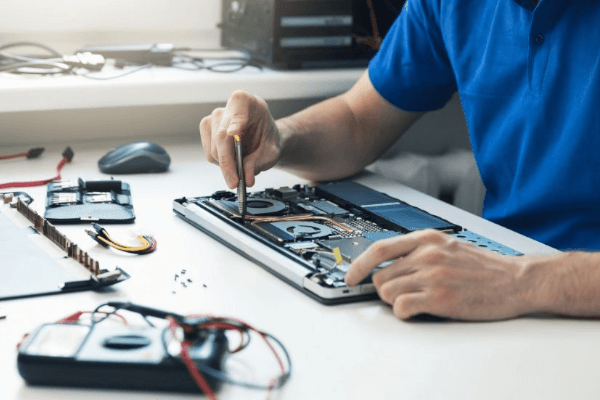
Comparison: PSNI certified integrator vs. standard local supplier
| Criterion | Local supplier / installer | PSNI certified integrator (MediaTech) |
| Solution design | Based on own experience and available product range | Based on validated designs + own experience |
| Compatibility testing | Verification during installation | Pre-testing before installation (laboratory verification) |
| Service escalation | Distributor → manufacturer (weeks) | Direct contact with the manufacturer’s technical team (days) |
| Project documentation | Depends on the supplier – often minimal | Standardized according to PSNI (diagrams, protocols, measurements) |
| Independence from technician | High dependence on one person | Documentation allows anyone to continue |
| ISO certification | Usually no | ISO 9001, ISO 14001 |
| International coordination | No | Yes – 65 countries through the PSNI network |
| SLA and proactive monitoring | Individual agreements, unstructured | Structured SLA with defined response times |
Who does not need a PSNI integrator?
To be honest, not every project requires this approach. A PSNI certified integrator will probably not add significant value if:
- It is a single video conferencing room with a simple setup (display + soundbar + USB camera)
- The company does not require SLA or long-term service
- The budget is strictly limited and the priority is the lowest purchase price regardless of long-term costs
- Integration with central IT infrastructure is not required
In these cases, a local supplier is a pragmatic choice.
However, a medium-sized company with multiple rooms, a hybrid work model and a need for reliable operation is exactly the profile where the investment in a PSNI integrator pays back.
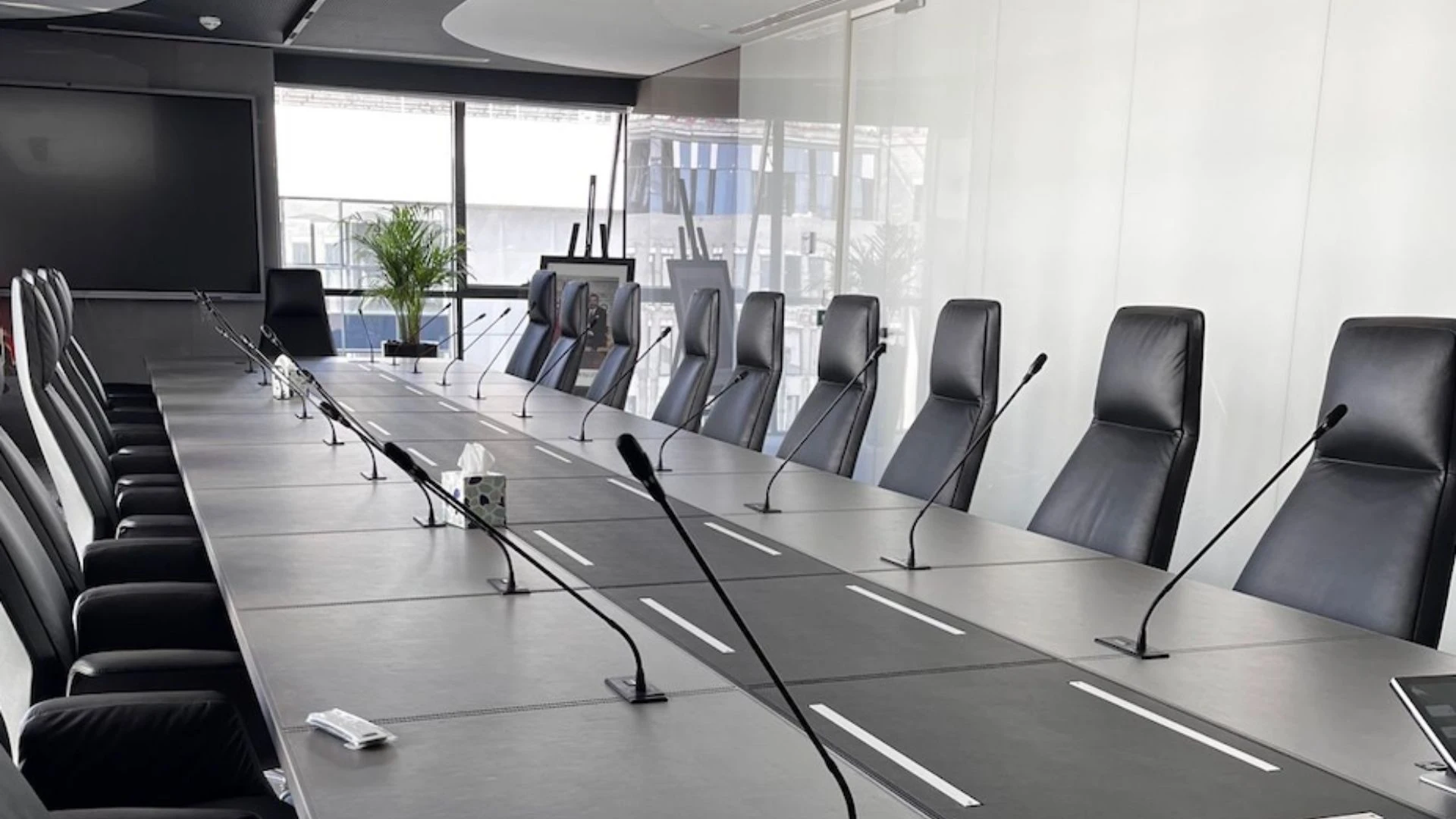
How much does the difference between a local supplier and a PSNI integrator cost?
The hardware costs the same from both suppliers because they use standard price lists. The difference is in the services: design, documentation, testing, training and SLA.
Estimated costs for different meeting room types can be found in our pricing guide.
A typical price difference is 10 – 20% of the total project. In absolute numbers, for a project with 5 equipped rooms in the range of €40,000 – €80,000, this means an additional €4,000 – €16,000.
Against this are measurable costs caused by insufficient implementation:
- One-day outage: Moving meetings, improvisation and loss of comfort for management. With 5 meeting rooms and a hybrid work model, this interrupts the workflow of entire teams.
- Changing supplier without documentation: A new integrator starts diagnostics from scratch. The cost of re-mapping and repairing the installation is often €3,000 – €8,000.
Warranty claim through a distributor, not directly with the manufacturer: Standard resolution time is 20 – 30 working days. During this period, the room does not work or works only with limitations.
When calculated over 5-year total cost of ownership (TCO), investing in a PSNI integrator is typically cost-neutral or positive. Savings on service, faster outage resolution and avoiding the need to “pay for fixing a predecessor’s mistakes” compensate for the higher initial price.
Frequently asked questions
| Question | Answer |
| Is PSNI certification relevant if we operate only in Slovakia? | Yes. International coordination is only one of the benefits. For a local company, validated technical designs, direct access to manufacturers (Tier 3 support) and standardized documentation are more relevant. These advantages apply regardless of geographic reach. |
| What is the price difference compared with a local supplier? | The hardware costs the same. The 10 – 20% difference is for services: design, documentation, testing and SLA. In a 5-year TCO calculation, a higher-quality delivery is typically cost-neutral or cheaper. |
| How many meeting rooms do we need for a PSNI integrator to be worth it? | It is not about the number of rooms, but about the complexity of the project. If the project includes integration with Teams or Zoom, centralized management or an SLA requirement, a PSNI integrator adds value from as few as 2 – 3 rooms. |
| How can I verify whether an integrator is truly PSNI certified? | On psni.org in the Certified Solution Providers section. MediaTech Central Europe holds three certifications: Global Services, Global Deployment and Quality Assurance. |
| Will we be tied only to MediaTech? | No. Standardized documentation according to PSNI standards means that anyone can take over the technical documentation of your project. You are not tied to one supplier. |
Would you like to discuss a specific project?
If you have 3 – 10 meeting rooms, a hybrid work model and want to know whether investing in a PSNI integrator makes sense, we will be happy to sit down for a consultation. We will go through your specific case and advise where the PSNI approach adds value and where a simpler path is enough.
The consultation is free and non-binding.
+421 220 999 700 | mediatech@mediatech.sk | mediatech.sk/kontakt