AV Technologies Under IT Management
Reading time: 8 minutes
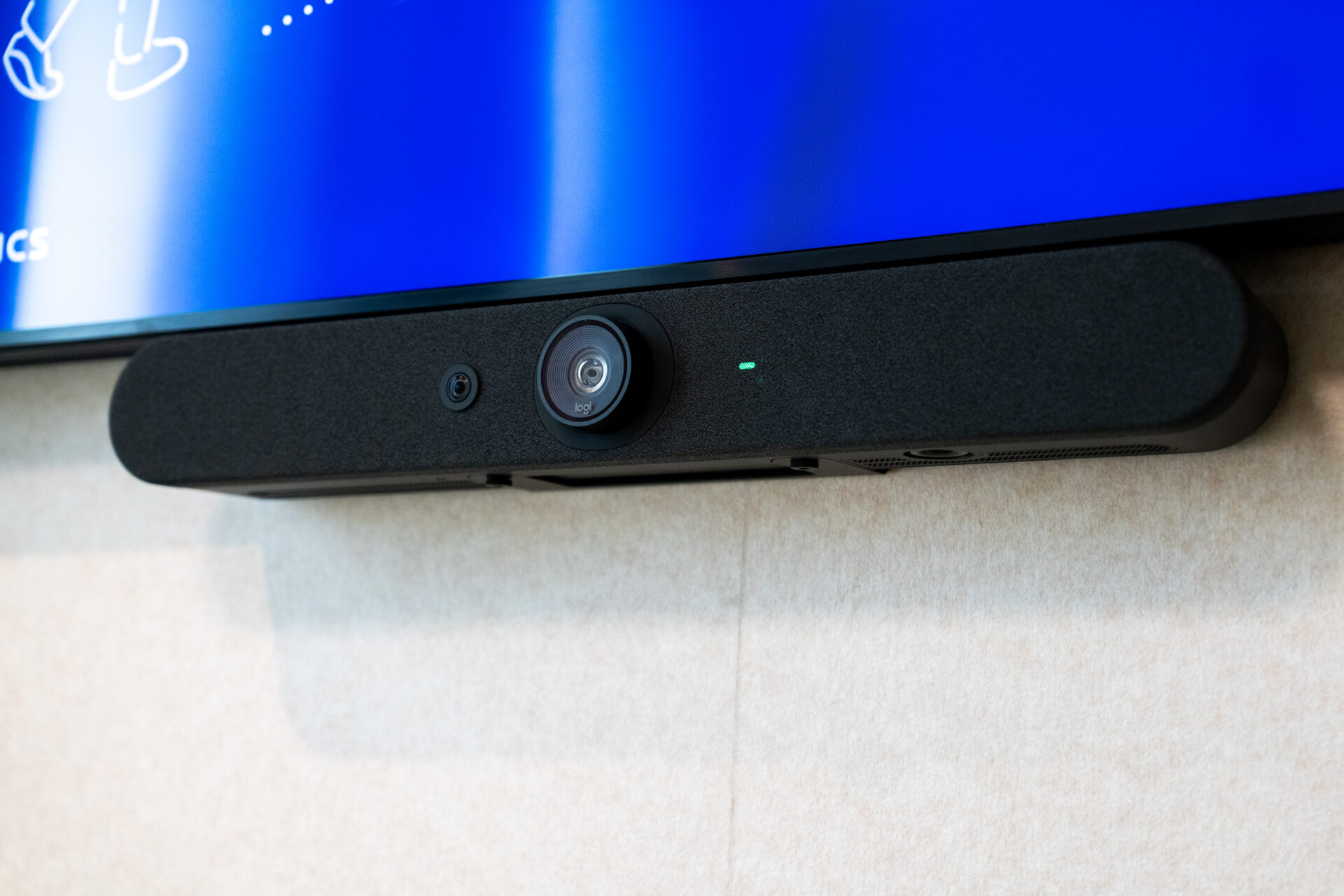
Audiovisual technology in meeting rooms has increasingly moved under the management of IT departments in recent years. This is a natural consequence of the fact that almost every device in the room now has an IP address.
The IT department has therefore inherited an area it was never trained for and which follows a different logic from the rest of the infrastructure. The overlap between IT and AV is actually narrow and can be defined precisely. It consists of four areas: the network, accounts and identity, cabling, and the corporate calendar. System design and the way the system behaves inside the room remain the integrator’s responsibility, and nobody expects IT to take over that role.
This article serves as a guide. It explains what has changed, where cooperation typically breaks down in practice and which four areas need to be resolved. Each section also points to a more detailed article.
Quick overview
- Why AV ended up under IT
- What you inherited and what you did not receive with it
- Two engineering disciplines, two different goals
- Where cooperation breaks down in practice
- Four things that need to be resolved
- Five questions before your next AV project
- Frequently asked questions
Why AV ended up under IT
A video conferencing system is now registered with a cloud platform such as Microsoft Teams, Zoom or Google Meet and cannot operate without a corporate account. A touchscreen controls devices over the network, while a room-booking panel outside the door reads the corporate calendar. Some devices are powered through PoE and therefore depend on the network switch, while wireless presentation systems allow external laptops to connect to your environment.
Facility management cannot manage this layer because it is network infrastructure that happens to produce video and sound. That is why it moved under IT, and logically so.
Only one half of the responsibility moved, however. The other half, the knowledge of why the system was designed the way it was, did not transfer to anyone. It remained with the AV integrator.
What you inherited and what you did not receive with it
Responsibility was transferred. Documentation was not.
The IT department typically receives rooms it did not purchase, did not specify and was never given an inventory for. It does not know what is connected to the network, which firmware versions the devices are running, what controls them or what happens when one component fails.
This becomes visible at three moments, and none of them is the day the room is handed over.
At the first failure. Without a topology, meaning a diagram showing what is connected to what and what controls what, it is impossible to determine whether the problem is in a device, the signal path or the network.
During expansion. When another room is added, you need to know whether it should connect to the existing system or operate independently. That decision cannot be made blindly.
When the environment changes. A password policy changes and the panels are signed out. The corporate calendar is migrated and room booking stops working. Network segmentation is modified and devices disappear. The AV layer continues to be affected even when nobody touches the AV equipment itself. We look at which devices belong on the corporate network and which should operate separately in our article about when AV belongs on the corporate network and when it should run separately.
Two engineering disciplines, two different goals
IT and AV are two disciplines, and each optimises for something different.
IT optimises across the organisation. Security, availability, standardisation and manageability. A good solution is one that can be deployed in the same way in Bratislava and at a branch office, managed remotely and incorporated into existing processes. Consistency is a virtue.
AV optimises for one specific room. Speech intelligibility, visibility of displayed content and ease of control. A good solution is one that works in this particular space, with this ceiling, this glass and this table. Consistency becomes a constraint that must be worked around.
The difference becomes clear only when looking at specific decisions. To ensure that a person at the end of a six-metre table can be heard without raising their voice, microphone placement and signal processing matter before the device model itself. If the technology should disappear from the table, the microphone array moves into the ceiling, which is a decision that must be made before the ceiling is closed. If a spreadsheet in a presentation needs to remain readable from the last row, the display is sized according to the viewing distance of the furthest participant and a panel with a matte surface is selected to reduce reflections from windows.
Nobody expects the IT department to own this layer. It is why the AV integrator owns the system design, and this is not a criticism of either side.

Where cooperation breaks down in practice
The problem is that AV is often not an owned responsibility within the organisation. This has nothing to do with people’s skills or willingness to cooperate.
The IT department was given responsibility for AV management but does not consider AV its professional domain. Facility management no longer owns it. Nobody has it in their objectives. Four recurring consequences follow.
The project is assigned to whoever currently has time. When an area has little organisational weight, it does not get the senior specialist. This reflects the priority the organisation has assigned to the project, not the quality of the individual involved.
The environment is not ready on installation day. Data outlets are not active, the switch does not have enough PoE budget, device accounts have not been created or the firewall blocks ports required by the video conferencing platform. Nobody neglected these things deliberately. They simply did not clearly belong to anyone.
A solution is imagined before a specialist becomes involved. IT often selects a particular device from an online store and approaches the integrator with that product already in mind. The devices have been selected, but nobody has specified how they should work together as a system. The topology is missing.
The cost has nowhere to go. Once the price has been agreed in a tender, time lost waiting for an unprepared environment cannot simply be added to the invoice. The supplier therefore absorbs it from its margin or the project pays for it through a delayed completion date.
Teaching the IT department audiovisual engineering will not solve this. Agree in advance who prepares what and by when, and put it in writing. If you are dealing with one room using a complete off-the-shelf system that connects directly to the corporate network, most of this article does not apply to you. One phone call will usually be enough.
Four things that need to be resolved
These are the questions an IT manager responsible for AV needs to answer. Each is covered in more detail in a separate article.
- Where does our responsibility end and the supplier’s begin? IT owns the network, ports, PoE budget, accounts and platform configuration. The integrator owns the system design and commissioning. Between them is an area where neither side can function without the other. The complete responsibility map and coordination timeline are covered in our article about the division of responsibilities between the IT department and the AV integrator.
- How will it fit into our network? Not everything in AV runs over the network, and what does run over it does not always belong on the corporate network. A single room may connect directly, several devices may receive a dedicated VLAN, while a large system using networked audio may operate outside your main switch infrastructure. We cover this in detail in our article about when AV belongs on the corporate network.
- How should it be specified and procured? A bill of materials is not a system specification. What the project document itself should contain is explained in our article about what an AV project must include. The procurement logic, including how to frame the brief so that proposals can actually be compared, is covered in You Know How to Procure IT. Why the Same Approach Doesn’t Work for Meeting Rooms.
- When should we become involved during construction? If the AV layer is being created as part of a new build or refurbishment, a second coordination boundary appears, this time with the architect and electrical designer. The decision timeline is covered in our article about AV coordination within a construction project.
If you are still deciding what type of room you actually need, start with our overview of meeting room types.
Five questions before your next AV project
Ask every supplier these questions before commissioning the project. The answers will separate the options faster than comparing prices.
- Who will draw the system topology, and is the documentation included in the delivery? An answer such as “we will work that out during installation” means there is currently a list of devices, not a system.
- What do you need from our network, and when will you provide those requirements in writing? A supplier who can answer this in advance is designing the project. A supplier who discovers it on installation day is improvising, and you pay for the delay.
- What did you use to size the design for this specific room? The answer should include the room dimensions. If it does not, the system was not designed for the space, it was selected from a catalogue.
- How is the system controlled when someone enters the room who has never used it before? Simplicity is the result of programming, not an inherent property of the device.
- Who is responsible for the final result in the room if another contractor installs the equipment? This is common in construction and refurbishment projects, and the answer must exist before the contract is signed.
Frequently asked questions
Why are AV technologies moving under the IT department? Meeting room devices are now networked. The video conferencing system registers with a cloud platform, the touchscreen controls other devices over the network, the room-booking panel reads the corporate calendar and some of the equipment is powered through PoE. Facility management cannot manage this layer because it is no longer simply equipment mounted on a wall. That is why responsibility has moved to IT.
Does the IT department need to learn audiovisual engineering? No. The overlap between IT and AV is narrow and concerns the network, accounts and identity, cabling, and the corporate calendar. Acoustics, microphone placement, display sizing and control logic are a separate engineering discipline owned by the integrator. IT is expected to provide a prepared environment and be available during commissioning, not to understand room-system design.
Why do AV installations get delayed? Most often because the environment is not ready. Inactive data outlets, insufficient PoE budget on the switch, missing device accounts or a firewall blocking required ports are typical examples. This is not necessarily negligence. It is a consequence of AV not having a clearly defined owner within the organisation. All of these points can be agreed on paper in advance.
What is an AV system topology and why does IT need it? It is a diagram showing what is connected to what and what controls what. It shows where each signal travels, where audio is processed, what controls the touchscreen and what happens when a component fails. Without it, you cannot determine the cause of a fault or decide whether a new room should connect to the existing system. A device list does not replace a topology.
Who should be responsible for an AV project within the organisation? It should be a named person with authority, not a department in general. In practice, problems often arise when accounts and permissions are prepared by corporate IT abroad while local IT has limited authority. The integrator then communicates with someone who can see the problem but cannot make the decision required to solve it. At the start of the project, identify who actually holds each relevant authority.
When can an AV project be completed without extensive coordination? For a single room using a complete system that connects directly to the corporate network. In that case, coordination may consist of one phone call and a written list of network requirements. More formal coordination becomes worthwhile once several rooms are involved or the system integrates more deeply with the network and corporate identity.
Next step
If AV has recently become part of your responsibilities and you are preparing a project, we can review the division of responsibilities with you before the brief is issued. Email us at mediatech@mediatech.sk or call +421 2 20 999 700 and tell us how many rooms you are dealing with and what stage they are currently at.