Room Acoustics and Sound Reinforcement: A Methodology for Eliminating Reflections and Managing Intelligibility
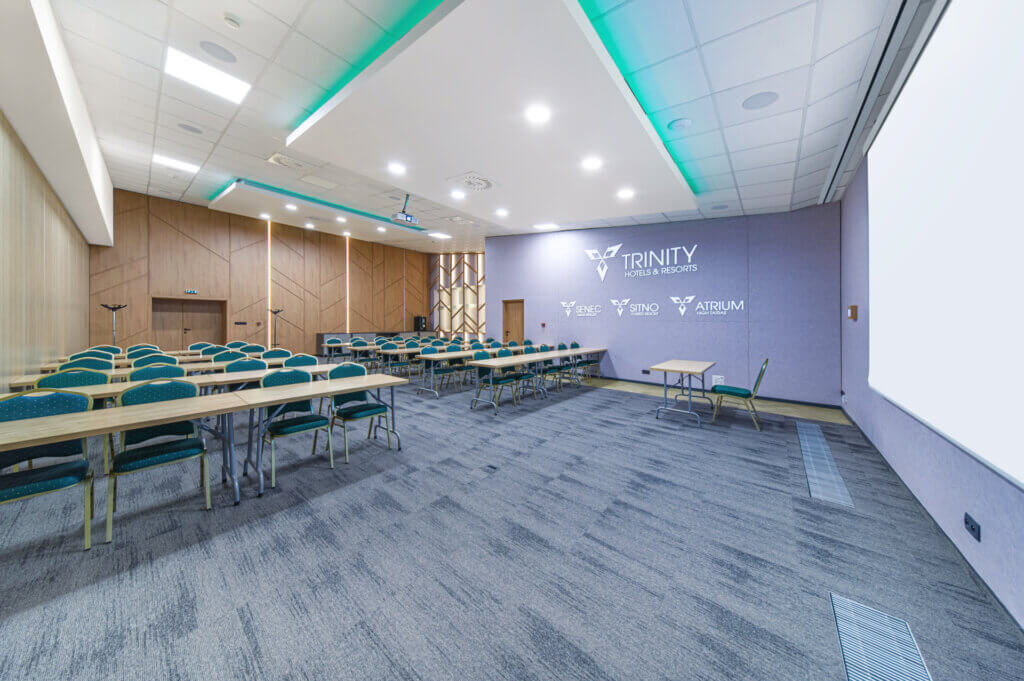
Quick summary:
Room acoustics are a critical part of a functional infrastructure. If they are underestimated during the design phase, technology cannot deliver clear sound. The result is employee fatigue, misunderstandings during calls, and a devalued investment.
When intelligibility is lost in a meeting room, auditorium, or congress centre, people often blame the loudspeakers. However, they are only one part of the equation. The room itself determines the final result.
While sound reinforcement technology generates and directs sound, room acoustics determine how it behaves after leaving the loudspeaker. A lack of coordination between these two disciplines poses the greatest risk to the investment’s long-term total cost of ownership (TCO).
The Physics of Acoustics: Why Words Get Lost in a Room
Modern offices built with concrete and glass present three invisible barriers that technology alone cannot overcome:
- Uncontrolled reverberation (echo effect): Sound continues to reflect off the walls for so long that new words overlap with previous ones. Meeting participants must concentrate intensely, leading to rapid fatigue and loss of attention.
- Low intelligibility (STI): The STI parameter indicates how much information a listener can actually understand. A low STI leads to costly communication errors and ambiguity in assignments.
- AEC technology failure: Echo-cancellation software has physical limits. If there are too many reflections in a room, the software begins to cut into the speaker’s voice, creating an unprofessional impression during important business calls.
In professional installations, acoustic elements are not used to enhance music, but to protect the original signal from degradation within the room.
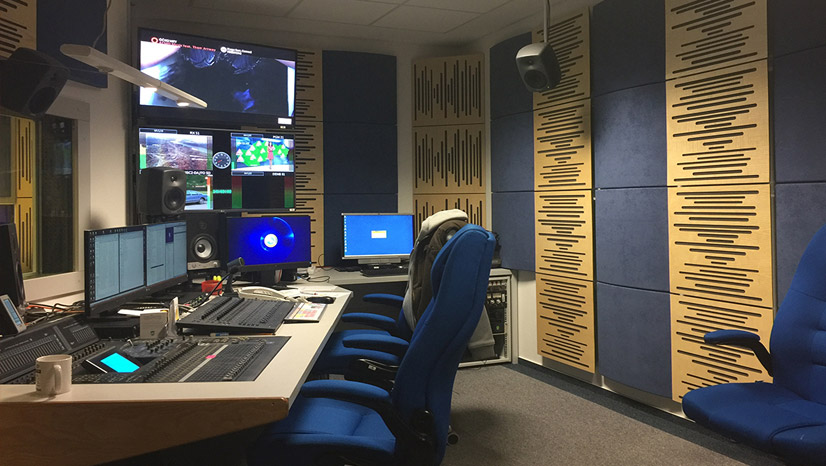
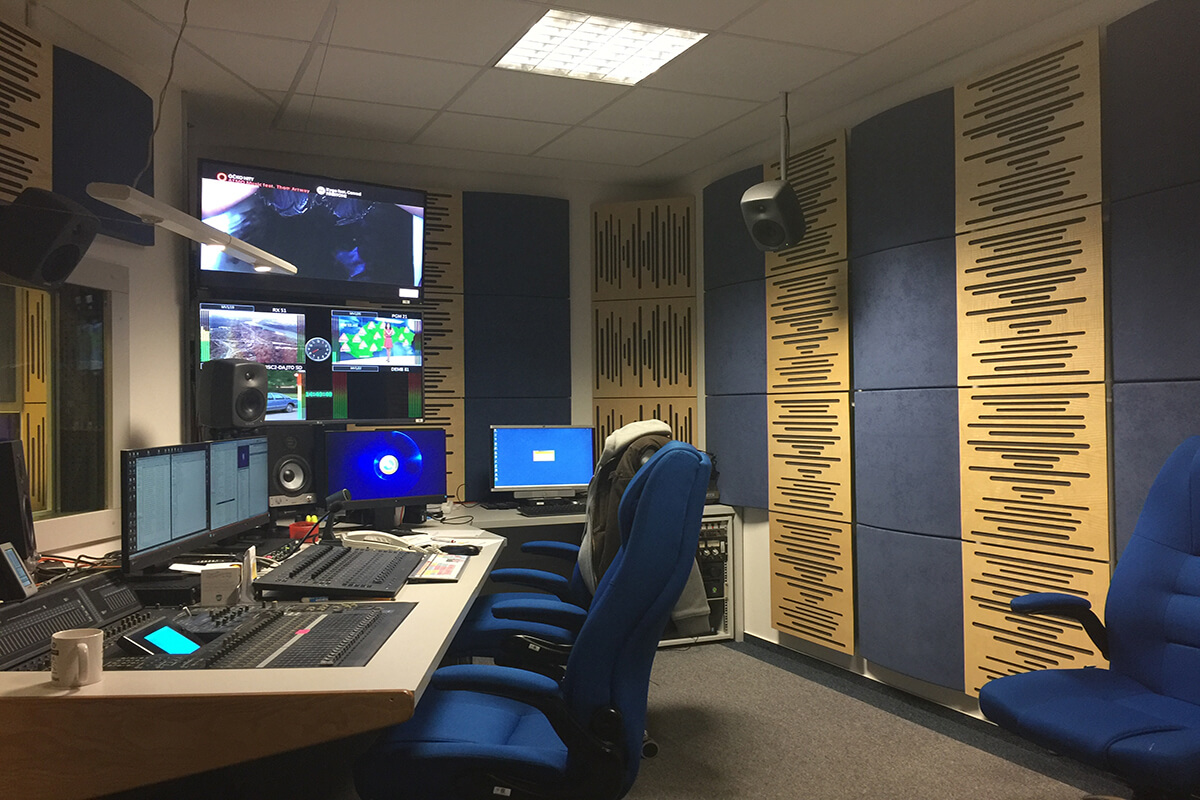
In projects with stringent requirements for output clarity, such as the TV Markíza recording studios, we used specialised Vicoustic Wave Wood panels that physically prevent chaotic reflections from forming on the walls.
Directing Sound: The Role of Line-Array Technology
Conventional loudspeakers radiate sound in all directions, unnecessarily exciting reflective ceiling and wall surfaces. In acoustically challenging spaces, the solution is column loudspeakers with electronic beam steering.
A study by SynAudCon confirmed that actively steered line-array systems generate a strong direct field while minimising excitation of the room. The result is a significantly higher STI (Speech Transmission Index) than with point-source loudspeakers. We applied this principle, for example, to the sound reinforcement system in an STU auditorium for 800 attendees.
How Poor Acoustics Undermine Technology Investments
Purchasing premium hardware for a room where acoustics have been overlooked is an investment mistake. Manufacturer Biamp notes in its technical documentation that even an optimally configured system will fail if the room parameters exceed acceptable limits.
Intelligibility Metrics: What You Need to Monitor
As integrators, we base procurement strategies on objective data rather than subjective impressions:
- RT60 (Reverberation Time): The reverberation time. For meeting rooms, our target is 0.4 to 0.6 seconds.
- STI (Speech Transmission Index): A scale from 0 to 1. For hybrid meetings and auditoriums, we require a value above 0.60, corresponding to good to excellent intelligibility.
- SNR (Signal-to-Noise Ratio): The signal-to-noise ratio. Biamp recommends a minimum of 10 dB and ideally 25 dB.

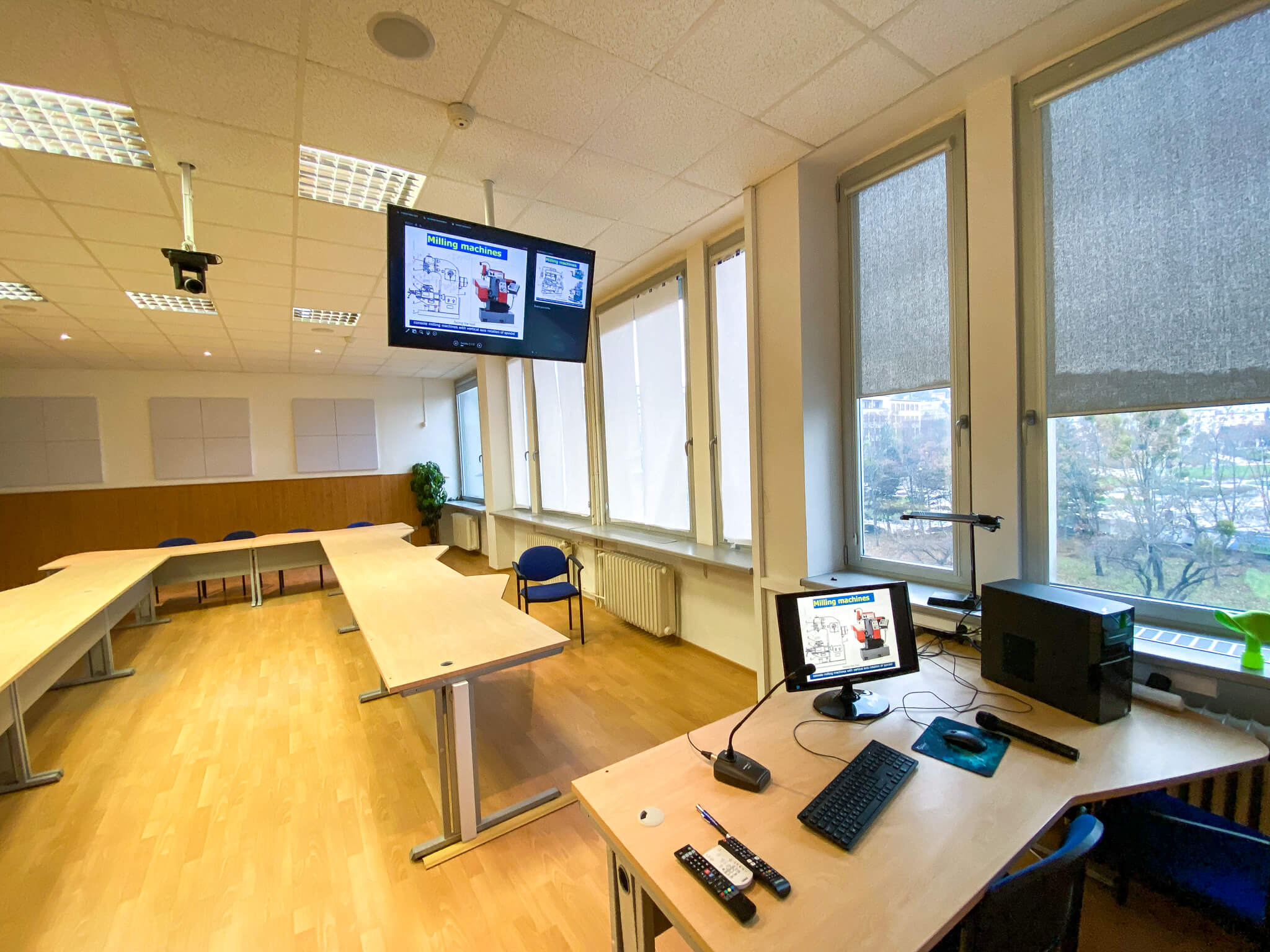
Reference: Distance Learning at STU
Hidden Risks and Limitations of AEC (Automatic Echo Cancelling)
Modern processors and ceiling microphones use beamforming: pickup beams that intelligently track the speaker and suppress background noise. Another technology is AEC, which ensures that a remote participant does not hear their own voice echoed back through the loudspeakers.
These two tools are essential in modern B2B communication, but they also have physical limits. No algorithm can correct the hollow sound of a room with excessive reverberation. If remote participants say that you sound as though you are in a cave, the problem is probably not the microphone but reflections from the walls.
An acoustic echo canceller is simply not a substitute for physically treating the room.
This is also confirmed by Shure in its technical document, which cautions against expecting too much from electronics in acoustically unsuitable halls.
Integration Methodology: The Shell-and-Core Construction Stage Is Critical
One of the most frustrating situations for an investor is involving the integrator only after the building has been completed. By then, the walls are closed, suspended ceilings are in place, and the only options are visible surface-mounted cables and design compromises.
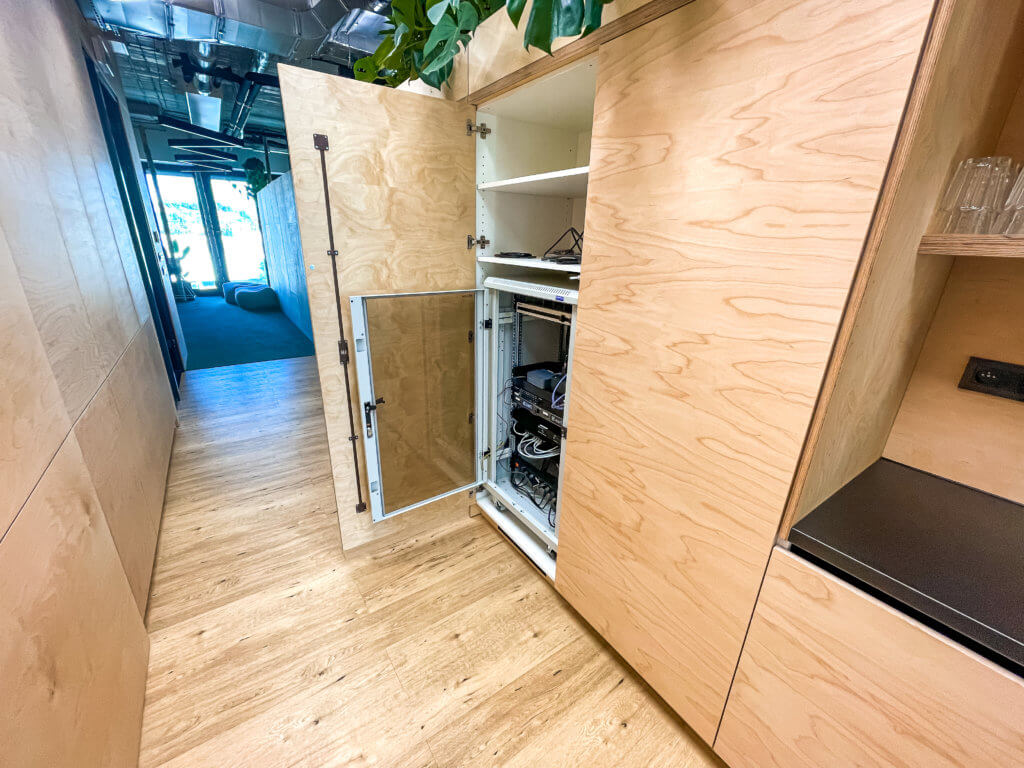
Construction Preparation for Proper Cabling and Equipment Racks
Our project experience confirms that the most cost-effective solution is the one implemented correctly the first time. Our methodology is built on three pillars:
- Diagnostics during the shell-and-core stage: We identify risk areas before walls are plastered and ceilings are installed, preventing the need for demolition work.
- Acoustics as an invisible partner: We position absorptive elements so that they do not disrupt the architect’s design while creating an acoustic shadow for the microphones.
- Verified measurement: Unlike conventional suppliers, we do not commission a project simply by switching on the equipment. We measure the actual intelligibility values, giving you evidence that the investment has achieved its purpose.
Reference: Metrohm / Corporate Spaces
Reference: Hotel Senec
Reference: Panta Rhei
Positioning Acoustic Absorption Panels with Interior Design in Mind
Acoustics and technology do not have to compromise a room’s design. When collaboration with the architect begins at the outset, the result is a seamless fusion of design and technology.
Specific examples:
At Metrohm, we concealed the equipment rack directly within the furniture. At first glance, it is indistinguishable from standard storage space.
At Roche, the microphones and panels are integrated into the conference room’s kitchen counter.
At TV Markíza, the acoustic panels match the colour of the logo and have become part of the room’s visual identity.
Mercedes-Benz Financial Services took the opposite approach: the technology is suspended directly from the ceiling as part of an exposed industrial design and complements the ventilation ductwork.

All these solutions share one thing: they were designed in collaboration with the architect.
Parameters Affecting the Total Cost of Acoustic Treatment and Sound Reinforcement
When an investor hears “acoustic treatment and sound reinforcement”, the first question is: how much will it cost? Instead of promising a cheap solution, it is fair to explain what the investment comprises and where savings can be made without compromising the result.
Cost of Acoustic Measurements and Design Documentation
The first cost is the design itself. Far from being unnecessary, it is the most important item because a properly designed project ensures that:
- The budget will be optimised using real data, reducing the risk of unexpected rework costs during or after installation.
- The design will include acoustic measurements of the existing room, a simulation of the proposed solution, technical documentation for the building contractor and electrician, and a budget with clearly defined line items.
Cost of Hardware and Acoustic Treatments
Hardware items include:
- power amplifiers,
- ceiling or column loudspeakers,
- microphones (ceiling beamforming, tabletop, or handheld),
- digital signal processors (DSPs),
- AEC modules
- and control systems.
In addition, acoustic materials are required:
- absorption panels,
- bass traps,
- diffusers,
- acoustic ceiling systems.
Acoustic measurements and design documentation typically account for five to ten per cent of the total installation budget.

Summary: What This Means for Your Investment
Room acoustics and sound reinforcement technology are not independent disciplines; they are two sides of the same coin. Ignoring either one means the other can never reach its full potential.
Three key takeaways:
First, no electronic system can correct poor room acoustics. This is not a marketing claim but a fact confirmed by manufacturers such as Biamp and Shure.
Second, directional loudspeakers can improve intelligibility even in acoustically challenging spaces. Independent measurements confirm that actively steered arrays achieve significantly higher STI scores than conventional point-source loudspeakers in the same room.
Third, becoming involved during the shell-and-core construction stage costs a fraction of remedial work after completion, and the outcome is incomparable.